A few years ago, I watched a customer fall in love with a strand of amazonite beads—until they asked the question everyone eventually asks: “How do I know it’s real?” Amazonite has that calm, watery blue-green that feels like a deep exhale, but it’s also a stone that gets imitated, dyed, or mislabeled. In this guide, you’ll learn what amazonite is (scientifically), what it’s used for (jewelry and wellness traditions), and how to buy it with confidence—especially online.

What Is Amazonite (and Why It Looks Like the Ocean)?
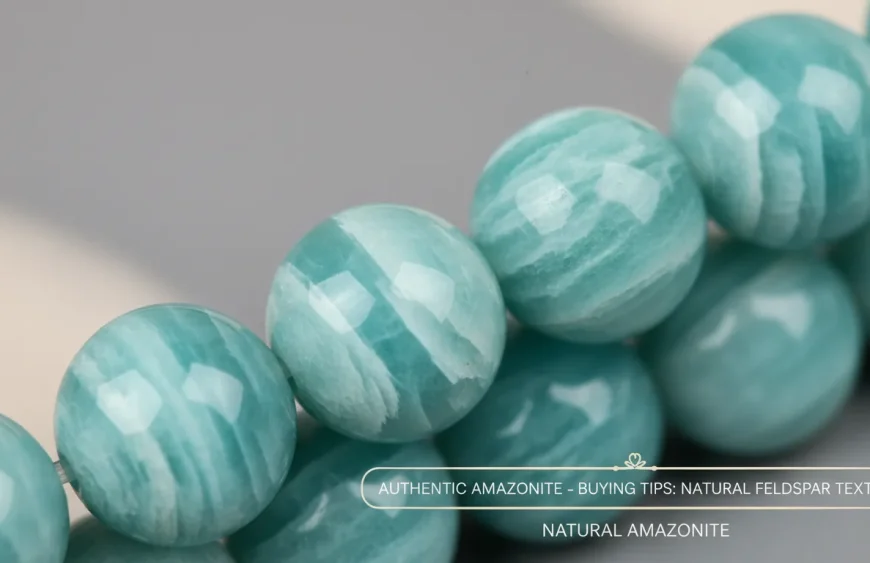
Amazonite is the trade name for a green to blue-green variety of microcline (a potassium feldspar) with the formula KAlSi₃O₈. Mineralogically, it sits in the feldspar family, typically forming in granitic pegmatites—slow-cooling environments that can grow large crystals. It’s usually translucent to opaque with a vitreous luster, and it commonly shows pale streaks or a “grid-like” internal look tied to feldspar structure.
If you like verifying details, these references are reliable starting points for properties and context:
- Amazonite (microcline) overview
- Gemological notes on amazonite and microcline
- Geology context and where it forms
Quick properties buyers should know
- Hardness: ~6.0–6.5 Mohs (durable, but not “drop-proof”)
- Cleavage: Perfect (can split along planes if hit)
- Typical color: Green, turquoise, blue-green (often with white veining)
- Common cuts in jewelry: Beads and cabochons more than faceting
Amazonite Meaning and Everyday Uses (Wellness + Style)
In crystal wellness circles, amazonite is often associated with calm communication, emotional balance, and soothing “reset” energy. I’ve found it pairs especially well with people who want a gentle daily-wear stone—something visually striking, but not loud. In fashion accessories, amazonite’s color reads coastal, clean, and modern, making it easy to style with neutrals, denim, white shirts, and minimalist gold or silver.
Common ways people use amazonite:
- Jewelry: Bracelets, necklaces, earrings—especially bead strands and pendants
- Mindful routines: Holding the stone during breathwork or journaling
- Gifting: A “steadying” stone for new jobs, big moves, or fresh starts
Important note: wellness traditions are personal and not a substitute for medical care. The value here is ritual, intention, and the way a piece helps you show up grounded.
Fake vs Real Amazonite | Learn the Difference
Real Amazonite vs Lookalikes: How to Spot Authenticity
The market challenge is simple: amazonite is popular, and popular stones attract shortcuts—especially dyed materials sold as “amazonite.” When I’m checking strands for a jewelry line, I look for multiple clues rather than relying on one “magic test.”
What real amazonite typically shows
- Natural variation: Slight shifts from blue-green to green, often with milky white streaks
- Soft, feldspar-like texture: Not glassy-perfect like synthetic materials
- Subtle zoning: Uneven color distribution, not a flat neon tone
Common amazonite lookalikes
- Dyed quartz or dyed agate: Color can look too uniform or too bright.
- Dyed howlite or magnesite: Often shows a “spiderweb” matrix pattern that isn’t typical for amazonite.
- Glass or resin: Extremely consistent color, overly glossy, sometimes too light for its size.
| Check | What you see in real amazonite | Red flags | What to do next |
|---|---|---|---|
| Color uniformity | Blue-green to turquoise tones with slight variation; may show natural mottling | Perfectly even “painted” color; neon/overly bright green-blue; dye bleeding into cracks | Ask if it’s dyed/treated; inspect under bright light and along drill holes/edges; buy from a seller with returns |
| Surface/texture | Waxy to vitreous luster when polished; minor natural pits or unevenness can occur | Plastic-like shine; sticky/soft feel; obvious coating layer or flaking finish | Check with a loupe for coating; wipe with a damp cloth to see if color transfers; avoid if finish looks artificial |
| Pattern/veining | White to cream streaks/patches (often albite) and subtle cross-hatched texture; irregular natural patterns | Repeating “printed” pattern; perfectly symmetrical veining; crackle network suggesting resin infusion | Compare to known amazonite photos; request close-up macro images/video in natural light; consider independent gemologist review for high-value pieces |
| Price cues | Mid-range pricing varies by clarity, size, and cut; larger clean pieces cost more | “Too good to be true” low price for large, vivid, clean stones; bulk lots with identical look | Compare prices across multiple reputable sellers; ask for weight, dimensions, and treatments; prioritize transparent listings |
| Seller documentation (certificate/return policy) | Clear disclosure of treatments; reasonable return window; invoice/receipt; optional lab report for higher-value items | No return policy; vague descriptions (“natural stone” only); unwilling to answer questions; questionable or generic “certificates” | Buy only with a solid return policy; request treatment disclosure in writing; for expensive items, ask for a recognized lab report or independent appraisal option |
A practical authenticity checklist (online-friendly)
- Zoom in on photos: Look for natural streaking and color zoning—avoid “flat” color.
- Ask what it’s made of: Sellers should say “microcline (amazonite)” rather than vague “green stone.”
- Request documentation: A certificate or sourcing statement helps, especially for higher-priced pieces.
- Check return policy: A solid return window is an underrated trust signal.
At StarryBead, the focus is straightforward: 100% natural crystals and gemstones with certificates to support authenticity—because you shouldn’t have to gamble on a stone you’ll wear for years.
Quality & Price: What Actually Drives Amazonite Value?
Amazonite is generally accessible, but pricing varies widely based on color, craftsmanship, and match quality across beads. The most desirable material tends to be a clean blue-green with pleasing, natural white accents—without looking chalky or overly gray.
Key value drivers:
- Color: More vivid turquoise-blue-green typically commands more
- Clarity/texture: Too many fractures can weaken durability; some inclusions are normal
- Cut & matching: Even bead sizing and consistent strand harmony raise cost
- Craftsmanship: Secure stringing, quality metal components, and finishing matter

For gem and jewelry context, the International Gem Society’s amazonite notes are helpful for understanding why amazonite is commonly used as cabochons and beads.
Buying Amazonite Jewelry: Step-by-Step Tips (No Regrets)
Buying amazonite should feel calming, not confusing. Here’s the same framework I use when sourcing pieces for crystal jewelry collections—especially when shopping online.
1) Decide your “why” first
- Want an everyday neutral? Choose softer blue-green beads with subtle white streaks.
- Want a statement piece? Go for higher saturation and larger cabochons.
2) Match amazonite with complementary stones (style + intention)
Amazonite looks especially cohesive with:
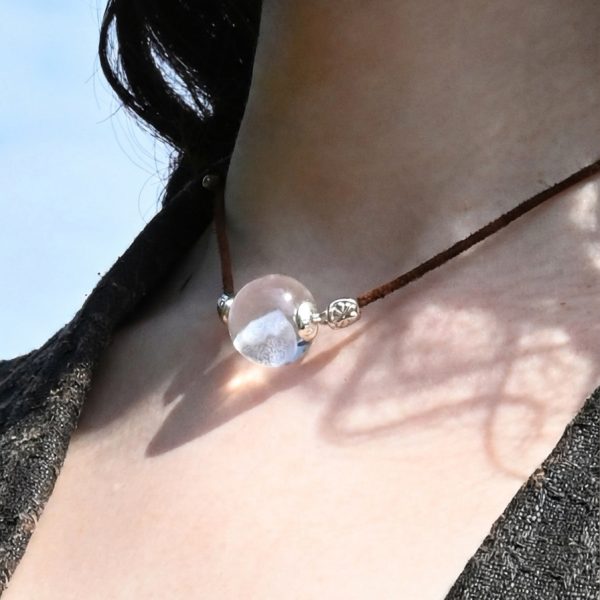
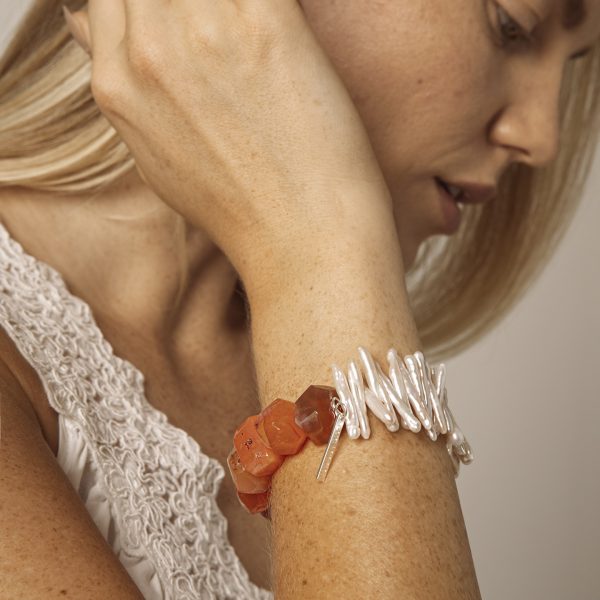
- Freshwater Pearl for clean, luminous contrast
- Clear Quartz for a crisp, bright pairing
- Smoky Quartz for grounded, earthy balance
- Black Tourmaline for a bold, modern edge
If you’re building a layered look, these pairings keep amazonite as the visual “sea-glass” centerpiece.
3) Confirm the basics before you buy
- Measurements (bead mm size, bracelet length, pendant dimensions)
- Materials (microcline/amazonite + metal type)
- Photos in natural light (or video)
- Shipping timeline and support response time

Care Guide: Keep Amazonite Beautiful (and Less Prone to Chips)
Because amazonite has perfect cleavage and sits around 6–6.5 Mohs, it’s wearable—but it’s not a “toss it in a gym bag” stone. I’ve seen the most damage happen from hard knocks against countertops and from storing it loose with harder gems.
Best practices:
- Store separately in a soft pouch.
- Avoid ultrasonic cleaners and harsh chemicals.
- Wipe with a soft cloth; use mild soap and water if needed, then dry fully.
- Remove before heavy lifting, cleaning, or sports.
Amazonite Origins, Names, and a Quick Myth Check
Despite the name, amazonite isn’t necessarily from the Amazon rainforest; the name likely reflects historical associations and early reports of Brazilian sources rather than a strict geographic rule. Many deposits occur in pegmatites worldwide, and locality names often travel with trade long before modern sourcing transparency became normal. If you enjoy the lore side, the “stone of courage and truth” narrative is common in modern crystal culture, but your buying decision should still rest on mineral identity, quality, and seller trust.
Conclusion: Let Amazonite Be Your Calm, Not Your Question Mark
Amazonite has a rare talent: it can look like a shoreline and wear like an everyday essential—if it’s authentic and well-made. When you buy amazonite, lean on real-world checks (photos, structure, documentation, return policy) and choose craftsmanship that protects a stone with natural cleavage. If you’d like help picking a piece that fits your style or pairing amazonite with pearls and complementary crystals, share what you’re drawn to—cool turquoise tones, softer seafoam, or bold statement cuts.
FAQ: Amazonite Questions People Also Search
1) Is amazonite a real gemstone or just dyed stone?
Amazonite is a real gemstone variety of microcline feldspar, but dyed stones are sometimes sold as “amazonite,” so it’s worth checking texture, pattern, and seller documentation.
2) How can I tell if amazonite is real at home?
Look for natural color variation and feldspar-like streaking, avoid overly uniform neon color, and buy from sellers with clear returns and certificates when possible.
3) Does amazonite fade in sunlight?
It’s generally stable for normal wear, but prolonged intense sun exposure isn’t ideal for most gemstones; store it away from direct sunlight when not worn.
4) Is amazonite durable enough for a daily bracelet?
Usually yes, with care—its hardness is moderate, but it can chip if knocked due to perfect cleavage.
5) What stones pair best with amazonite jewelry?
Freshwater Pearl, Clear Quartz, Smoky Quartz, and Black Tourmaline are popular pairings for both style and contrast.
6) Why does amazonite have white streaks?
Those streaks are common in feldspar and often reflect natural internal structure and intergrowths; they can be a positive authenticity clue.
7) What should I look for when buying amazonite beads online?
Consistent bead sizing, natural patterning, accurate labeling as microcline/amazonite, real-light photos, and a trustworthy return policy.