You know that moment when your mind feels loud—tabs open everywhere, shoulders up around your ears—and you want one simple thing to hold onto? The first time I picked up selenite, it felt like that: not “magic,” but quiet. People often ask, “What is selenite, what does it do, and is it safe?” Let’s walk through the science, the common wellness uses, and the real-world care rules so you can enjoy selenite with confidence.

What Is Selenite (Really)?
Selenite is a variety of gypsum, a naturally occurring sulfate mineral made of calcium sulfate dihydrate (CaSO₄·2H₂O). In plain terms, it’s a soft, often translucent mineral that can form in beautiful clear “window” plates or in silky, fibrous forms often sold as “selenite” (commonly satin spar gypsum). Mineral references classify it in the monoclinic crystal system, and its softness is a key trait: Mohs hardness ~2, which means it can scratch easily—even with a fingernail. For mineral specifics and identification details, see Selenite (gypsum) on Wikipedia and locality data at Mindat’s selenite profile.
Selenite vs. Satin Spar vs. “Desert Rose”
A lot of confusion comes from store labels. In many shops, “selenite” is used as an umbrella term for several gypsum habits.
- True selenite: clearer, glassy “window” plates; can be very transparent.
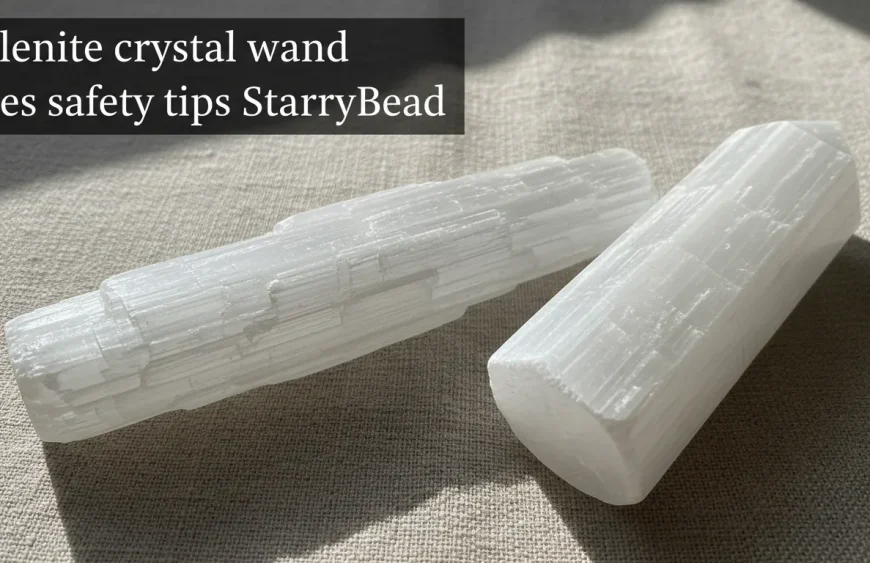
- Satin spar: fibrous, silky glow, usually milky-white; very commonly sold as selenite wands/towers.
- Desert rose (gypsum rose): rosette shapes formed with sand inclusions; still gypsum.
If you’re shopping, it’s okay to use the common name “selenite,” but knowing these forms helps you understand why two pieces can look so different.
| Store Name | Mineral Type | Look/Texture | Common Products | Key Care Note |
|---|---|---|---|---|
| True Selenite (gypsum) | Gypsum (selenite variety) | Clear to milky, glassy, smooth plates; sometimes striated | Slabs, window panes, palm stones, tumbled | Very soft and water-soluble—keep dry; scratches easily |
| Satin Spar (gypsum) | Gypsum (satin spar variety) | White/cream, silky-fibrous with strong chatoyancy | Wands, towers, spheres, lamps, worry stones | Fibrous and fragile—avoid soaking; can splinter along fibers |
| Desert Rose (gypsum) | Gypsum (rosette formation; often with sand) | Rosette “petals,” sandy/gritty, tan to brown | Clusters, specimen pieces, display decor | Dusty and crumbly—brush gently; avoid water and abrasion |
| Anhydrite (often mis-sold) | Anhydrite (CaSO₄, not gypsum) | Blue/gray/white, more blocky/granular; less silky sheen | Carvings, palm stones, tumbles, rough chunks | Still soft—avoid water exposure; can alter/hydrate over time |
Why Selenite Looks Like “Frozen Light”: How It Forms
Selenite typically forms in evaporative environments—places where mineral-rich water slowly evaporates and leaves gypsum behind in layers. That slow, steady growth can create long blades, plates, and fibrous bundles with that signature glow. If you’ve ever seen photos of Mexico’s giant gypsum crystals, that’s the same mineral family, formed under very specific heat and saturation conditions over long periods. A helpful overview of formation and specimen context is available at FossilEra’s selenite guide.

Common Selenite Uses (Wellness + Home + Style)
Selenite is popular because it’s visually calming and easy to place in daily routines. In the wellness world, many people associate selenite with “clearing,” “resetting,” and “lightness,” often using it as a ritual cue to slow down.
1) Space and mood “reset” (home decor use)
Many people place selenite near a bedside, entryway, or desk to create a peaceful visual anchor. I’ve tried this on my own work desk—when my day gets hectic, I don’t stare at the screen harder; I touch the stone and treat it like a reminder to unclench my jaw and breathe.
- Place a wand/tower where you see it daily.
- Pair it with a small “closing ritual” (lights off, 5 slow breaths, tidy one item).
2) Meditation and mindfulness support
Selenite is often used as a focus object during meditation. Whether or not you believe in energetic claims, a consistent object can train your brain to enter “quiet mode” faster.
Try a simple routine:
- Sit comfortably and hold selenite loosely in one hand.
- Inhale for 4, exhale for 6, repeat 6 times.
- Set one sentence intention (example: “Today, I choose calm clarity.”).
For a general overview of popular metaphysical associations, you can compare descriptions at The Crystal Council’s selenite page and Energy Muse’s selenite meaning. (Note: these are spiritual perspectives, not medical claims.)
3) “Charging” or storing other crystals (a popular ritual use)
A common practice is to place smaller stones on or near selenite overnight. People describe it as “recharging.” From a practical angle, it’s also just a neat way to store crystals in one clean spot—especially if you’re building a small collection.
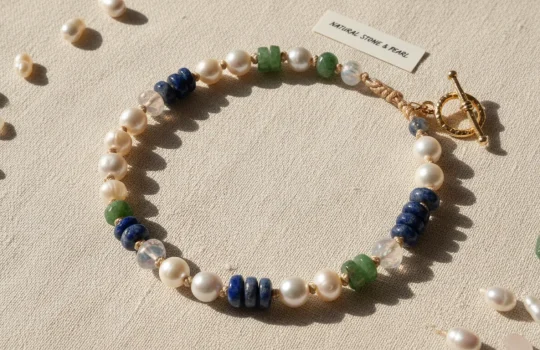
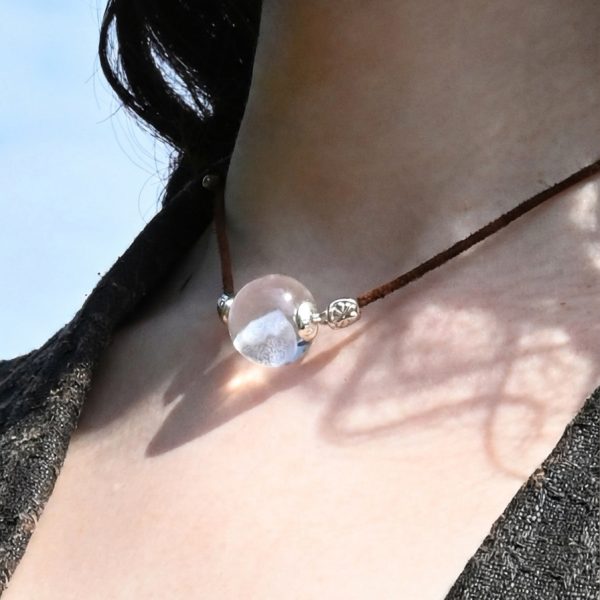
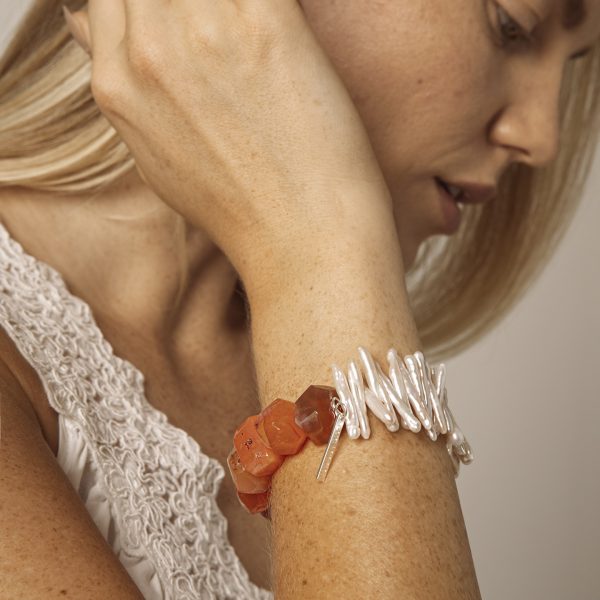
If you wear crystal jewelry, consider a dedicated tray space so your pieces don’t knock together and scratch.
4) Styling and gifting (what works—and what doesn’t)
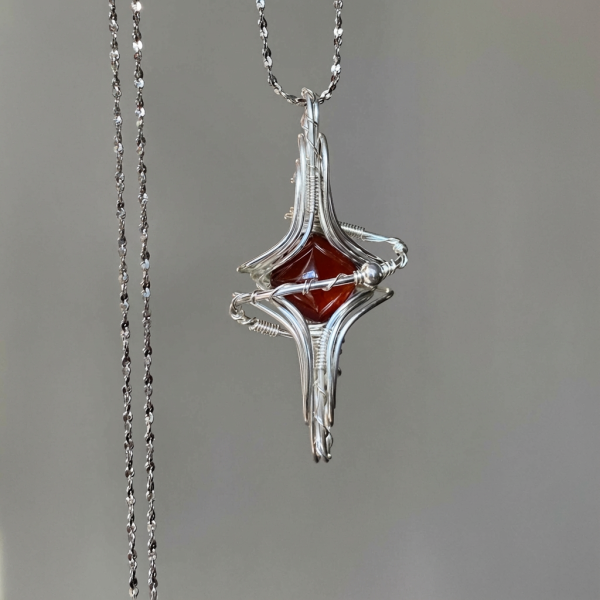
Selenite is stunning, but because it’s so soft, it’s not ideal for everyday-wear rings or pieces that take knocks. In accessories, it’s better as:
- Occasional-wear pendants (protected setting)
- Statement earrings (light wear, careful storage)
- Display pieces on a vanity rather than in a pocket
In StarryBead-style crystal wardrobes, selenite pairs beautifully with clearer stones for an airy look, such as clear quartz, and with grounding stones like black tourmaline for contrast.
How to Use a Selenite Wand with Krista Mitchell
Selenite Safety Tips: The Rules That Actually Matter
Selenite safety is mostly about water, impact, dust, and expectations. It’s not about fear—it’s about treating a soft mineral like a soft mineral.
1) Keep selenite dry (yes, really)
Gypsum is water-soluble over time, and selenite can dull, pit, or weaken if it’s soaked. Avoid:
- Rinsing under running water
- Saltwater bowls
- Leaving it in a humid shower space
Better options: wipe with a dry or barely-damp cloth, then dry immediately.
2) Avoid drops and scratches
With Mohs hardness around 2, selenite can scratch easily and chip if dropped.
- Store it in a soft pouch or padded box.
- Keep it away from harder stones (like quartz at Mohs 7).
- Don’t toss it loose in a handbag with keys or coins.
3) Be mindful of dust when sanding or breaking
Normally, handling finished selenite is low-risk. But if you’re cutting, sanding, or generating dust, use basic safety:
- Ventilation
- Mask/respirator appropriate for dust
- Clean-up that avoids kicking particles into the air
4) Wellness claims: keep it honest
Selenite is widely used for spiritual and emotional rituals, but it should not replace medical care. If anxiety, sleep issues, or mood concerns feel heavy, consider professional support alongside your self-care tools.
How to Cleanse and Care for Selenite (No Water Needed)
Here’s a practical care routine that works well for most people:
- Dry dusting: microfiber cloth once a week.
- Spot clean: lightly damp cloth only if needed, then dry immediately.
- Storage: separate compartment or pouch.
- Display: keep away from sinks, windowsills with condensation, and high-traffic drop zones.
If you’re using selenite as part of a ritual, consistency beats complexity. A small habit you’ll repeat is more powerful than an elaborate one you’ll abandon.

How to Tell if Selenite Is Real (Quick Checks)
No test is perfect, but these quick cues help you avoid obvious fakes:
- Softness: real selenite/gypsum scratches relatively easily (be cautious testing).
- Look: satin spar often has parallel fibrous lines and a silky sheen; true selenite can be clearer.
- Feel: it’s usually cool to the touch at first and lightweight for its size.
- Too perfect? Extremely glassy “selenite” that behaves like hard glass may be something else.
When buying jewelry or decor, look for sellers who disclose material type and care guidance, and who understand the gypsum family rather than using “selenite” as a catch-all.
Selenite in a Crystal Wardrobe: Pairings That Make Sense
If you like building intentional sets (for color, symbolism, or mood), selenite is often treated as the “bright neutral.” Pair it with:
- Clear quartz for a clean, minimalist palette
- Amethyst for a soft lavender + moonlight look
- Black tourmaline for strong contrast and grounded styling
- Citrine for a warm pop against selenite’s cool glow
In my experience designing and styling crystal looks, selenite works best when it’s the background note—it makes other stones feel more “organized” visually.
Conclusion: A Quiet Stone with Very Practical Boundaries
Selenite is gypsum—soft, luminous, and easy to love once you understand its limits. Use selenite as a visual and ritual tool for calm, keep it dry, protect it from scratches, and treat spiritual meanings as personal practices rather than promises. If you’re building a wearable crystal story, selenite can be the gentle “reset” piece in your rotation—especially when you care for it like the delicate mineral it is.
FAQ About Selenite
1) What is selenite made of?
Selenite is a variety of gypsum made of calcium sulfate dihydrate (CaSO₄·2H₂O).
2) Can selenite go in water?
It’s best to avoid water. Selenite can degrade, dull, or weaken with soaking or repeated exposure.
3) Is satin spar the same as selenite?
In strict mineral terms, satin spar is a fibrous form of gypsum often sold as “selenite.” Many shops use “selenite” as a broad trade name.
4) What is selenite used for spiritually?
Many people use selenite for clearing, calm, and meditation focus. These are spiritual beliefs and personal practices, not medical treatments.
5) Where should I place selenite in my home?
Common spots include a bedside table, entryway, or desk, anywhere you want a calming visual cue and low risk of water exposure.
6) How do I clean selenite safely?
Use a dry microfiber cloth. If needed, use a barely damp cloth and dry it immediately—no soaking, no saltwater.
7) Is selenite good for jewelry?
Selenite is very soft, so it’s better for protected, occasional-wear pieces than daily-wear rings or items that get knocked around.
External references: Selenite (gypsum) on Wikipedia Mindat selenite mineral data FossilEra: selenite overview and formation context