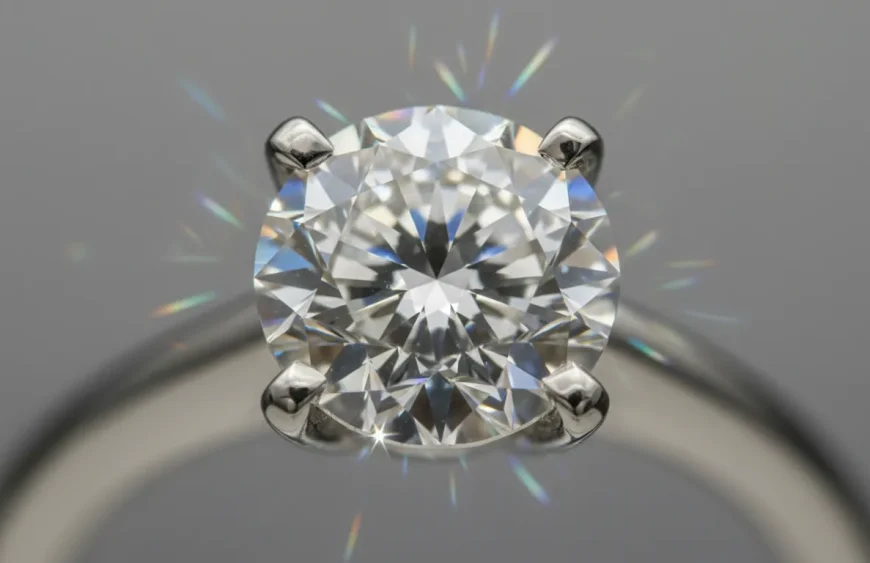
A diamond birthstone has a way of “showing up” in your life—sometimes as a gift you didn’t expect, sometimes as a piece you buy after a hard season because you want something that feels unbreakable. I’ve watched shoppers fall in love with a diamond’s sparkle, then pause and ask the real questions: What does it mean? How do I care for it? Why is it so expensive? And are the myths… actually true? Let’s walk through the diamond birthstone story with clear answers and a little wonder.

What month is the diamond birthstone?
Diamond is the birthstone for April. In modern birthstone lists, April is strongly associated with diamond—largely because it symbolizes strength, clarity, and enduring love, and because it has a long history in high-status jewelry and milestone gifts.
If you’re trying to match stones across the year, StarryBead also keeps a broader map in this guide: Birthstone Chart by Month (Modern vs Traditional): Meanings, Colors & Jewelry Guide.
Diamond birthstone meaning (and why people connect to it)
The diamond birthstone meaning is often summarized as clarity + resilience + commitment. Even the name traces back to the Greek “adamas,” meaning invincible, which fits the way diamonds resist scratches better than any other natural gemstone. When I’m helping someone choose a birthday piece, I notice April-born customers often describe wanting something that “holds up” to real life—work, travel, kids, the whole beautiful mess.
Common meaning keywords you’ll see tied to the diamond birthstone:
- Strength and endurance (symbolic and physical)
- Purity and clarity (mental focus, clean intention)
- Everlasting love (why diamonds became iconic for engagement)
For historical context from a gem authority, GIA’s overview is one of the best references: GIA April birthstone: Diamond meaning & history.
Diamond birthstone history in a nutshell (India → Brazil → South Africa)
The diamond birthstone story starts in India, where diamonds were gathered from rivers and traded as early as the 4th century BCE, then moved through major trade routes into Europe. By the 1400s, diamonds were a status symbol for elites, and in 1477 the first recorded diamond engagement ring helped shape modern tradition—one reason the diamond birthstone still feels like a “milestone” gem today.
As India’s supply declined, Brazil rose in the 1700s, and South Africa reshaped the modern market after major discoveries near Kimberley in the late 1860s. GIA covers this timeline with strong detail and examples: Diamond origin and market history (GIA). For buyer-focused background, this overview is also solid: American Gem Society: history of the diamond as April’s birthstone.
Diamond birthstone myths (beautiful stories vs real-life facts)
Myths stick to diamonds because the stone itself feels mythic. Across cultures, people once believed diamonds were tears of gods, splinters of stars, or formed by lightning—and diamonds were worn as talismans for protection or invincibility. These stories can be meaningful symbolically, but they’re not scientific explanations of diamond formation.
Here’s the myth-busting version I share when customers ask:
-
Myth: Diamonds are indestructible.
Truth: Diamonds are extremely hard, but they can chip if hit at the wrong angle (especially along edges and corners). -
Myth: A diamond always means “love.”
Truth: It can mean love, but as a diamond birthstone it can also represent self-trust, endurance, and clarity—a personal “I made it through” token. -
Myth: Diamonds only come in white/clear.
Truth: Natural diamonds can be yellow, blue, pink, green, and more depending on trace elements and crystal structure.
If you like myth-busting crystal content in general, you may also enjoy StarryBead’s approach here: Rose Quartz Myth-Busting: Meaning, Uses & What’s Real.
Diamond birthstone price: what really drives cost?
Diamond birthstone price usually comes down to a mix of the 4Cs plus certification, origin, and market demand. The 4Cs—Cut, Color, Clarity, Carat—are the global language for diamond quality and pricing, standardized by institutions like GIA: GIA Diamond Quality Factors (the 4Cs).
The 4Cs (quick buyer logic)
- Cut: Often the biggest driver of sparkle. A well-cut diamond can look brighter even if other grades aren’t top-tier.
- Color: “D” is most colorless and rare; many diamonds show warmth (yellow/brown tint).
- Clarity: Fewer inclusions usually means higher value, though many inclusions are invisible without magnification.
- Carat: Bigger usually costs much more per carat at popular thresholds (like 1.00 ct).
Natural vs lab-grown diamonds (why prices can feel worlds apart)
Lab-grown diamonds are chemically the same material (carbon crystal), but they’re produced at scale—so pricing behaves differently. Many shoppers choose lab-grown to maximize size or cut quality within budget, while others prefer natural for rarity and tradition.
| Factor | Natural Diamond | Lab-Grown Diamond |
|---|---|---|
| Rarity | Naturally rare | Manufactured supply is scalable |
| Typical price | Higher | Often far lower for similar look |
| Value drivers | 4Cs + rarity + market | 4Cs + brand + production economics |
| Best for | Heirloom tradition, rarity | Budget stretch, larger carat, big sparkle |

How to clean and care for diamond birthstone jewelry (simple routine)
A diamond birthstone is tough, but daily wear creates a problem you can’t see at first: oil film. Skin oils, lotion, sunscreen, and soap residue can mute sparkle, making people think their diamond “lost its shine.” The good news: basic care brings it right back.
At-home cleaning steps (the safe classic)
- Mix warm water + a drop of mild dish soap.
- Soak jewelry 10–20 minutes.
- Gently brush with a soft toothbrush, especially under the setting.
- Rinse well and pat dry with a lint-free cloth.
- Check prongs/settings for anything that looks loose.
This approach aligns with common jeweler guidance: How to clean and protect diamond jewelry.
Care do’s and don’ts (what I’ve seen save pieces)
- Do remove diamond rings before workouts, cleaning, gardening, or moving furniture.
- Do store diamond jewelry separately—diamonds can scratch other gemstones and even other diamonds.
- Don’t wear diamonds in pools/hot tubs; chlorine can damage the metal and weaken settings.
- Don’t assume “hard” means “chip-proof”—sharp impacts can still cause damage.

Is diamond October birthstone?
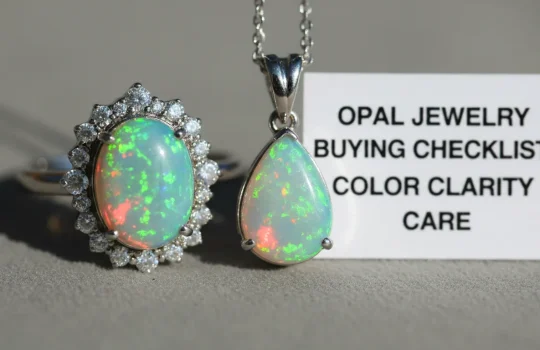
No—diamond is not October’s birthstone. October is typically opal and tourmaline in modern lists. Diamond belongs to April, which is why “April birthstone diamond” is such a common search phrase.
If you want a deeper April-specific guide with styling alternatives, this StarryBead article is a helpful next read: Birthstone Month of April: Diamond Meaning, History, and Modern Alternatives (Plus How to Wear It).
What are the 12 birthstones by month? (quick list)
Birthstone lists can vary slightly by tradition, but here’s a widely recognized modern lineup:
- January: Garnet
- February: Amethyst
- March: Aquamarine (or Bloodstone)
- April: Diamond
- May: Emerald
- June: Pearl (also Alexandrite/Moonstone in some lists)
- July: Ruby
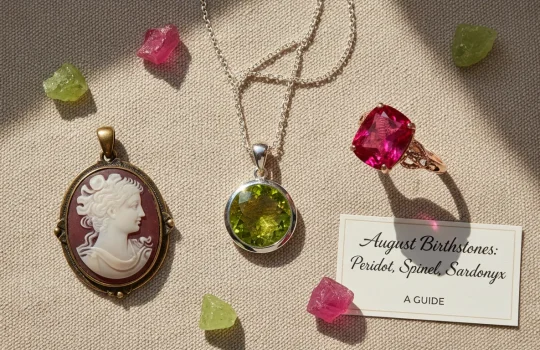
- August: Peridot (also Spinel/Sardonyx in some lists)
- September: Sapphire
- October: Opal, Tourmaline
- November: Topaz, Citrine
- December: Turquoise, Tanzanite, Zircon (some lists add more)
Are diamonds the “king of all birthstones”?
In everyday language, many people call diamonds the “king” because they’re culturally iconic, extremely hard, and often expensive—plus they dominate engagement ring tradition. Practically speaking, though, “most valuable” depends on specific stone quality and rarity—for example, certain fancy-color diamonds or rare gems (like alexandrite) can be astonishingly costly.
Diamond birthstone buying tips (no regrets checklist)
When someone tells me they want a diamond birthstone gift that feels meaningful and smart, I steer them toward a few non-negotiables:
- Prioritize cut if sparkle matters most; it’s the “life” of the stone.
- Ask for a grading report (GIA is the most widely recognized standard).
- Choose setting style for lifestyle: active hands do better with protective settings.
- Plan for maintenance: annual inspection keeps prongs secure and prevents loss.
FAQ: Diamond birthstone questions people ask most
1) What month is diamond birthstone?
Diamond is the April birthstone.
2) What does the diamond birthstone mean?
Most commonly: strength, clarity, resilience, and enduring love.
3) Can I wear diamond if I’m not born in April?
Yes. Birthstones are tradition, not a rule—many people wear diamond for symbolism or style.
4) How often should I clean diamond jewelry?
A gentle clean once a month is a good baseline if you wear it often; do a professional check once a year.
5) Are diamonds indestructible?
No. Diamonds resist scratches extremely well, but they can chip from sharp impacts.
6) Is diamond the October birthstone?
No—October is opal and tourmaline (commonly).
7) What are the top 3 most expensive birthstones?
It varies by quality and market, but stones that often rank among the most expensive include diamond, ruby, and emerald (with rare exceptions like alexandrite competing at high quality).
Conclusion: the diamond birthstone as a “life-proof” kind of sparkle
A diamond birthstone isn’t just about being born in April—it’s about choosing a symbol that can sit with your story through every season: the joyful milestones and the quiet rebuilds. I’ve seen diamonds become a promise ring, a self-gift after a promotion, a family heirloom-in-the-making—proof that meaning is something you wear into existence, not something you wait for.