The first time I heard someone ask for a “moonlight stone,” they weren’t being poetic—they were standing at a market stall, holding a milky white gem that flashed blue when it tilted. “Is this the real one?” they asked, and the seller said yes a little too fast. If you’ve felt that same pause—what am I actually buying, and how do I know?—this guide is your calm, practical checklist.
In jewelry, “moonlight stone” is almost always a casual name for moonstone (and sometimes “rainbow moonstone,” which is commonly labradorite marketed under a moonstone name). Below, you’ll learn how to spot real vs fake, what pricing looks like, and how to care for moonlight stone so it keeps that soft glow.

What is “moonlight stone” (and why the name gets confusing)
“Moonlight stone” is not a strict gem lab term. Most shoppers use it to mean moonstone, a feldspar gemstone known for adularescence—that floating, moon-on-water glow caused by light scattering through thin internal layers.
Here’s where confusion happens:
- Moonstone (orthoclase feldspar): classic soft white/gray body with a blue or silvery sheen.
- “Rainbow moonstone” in many shops: frequently labradorite, with multicolor flashes (more “oil slick” or rainbow than moonlit sheen).
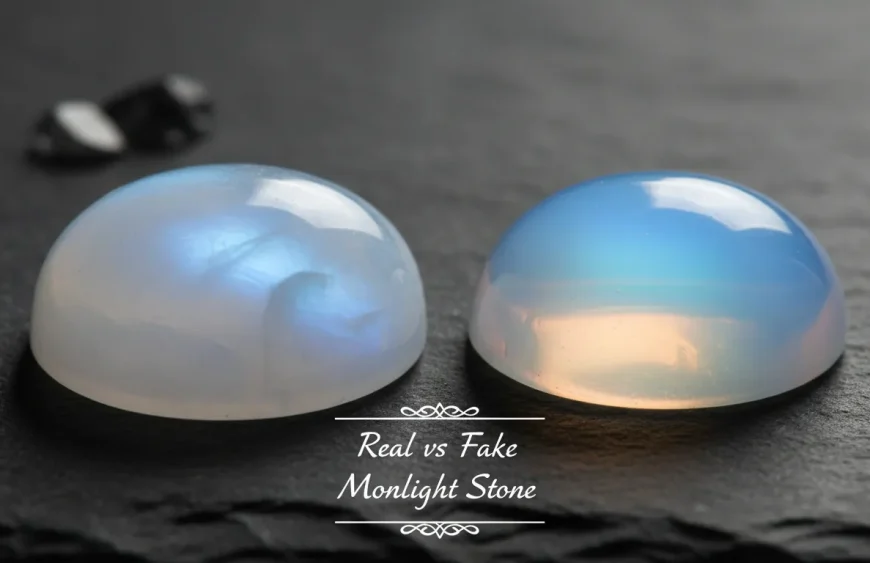
- Opalite: man-made glass often sold as moonstone; it looks pretty, but it’s not a natural moonlight stone.
If you want a deeper moonstone-only breakdown, see our internal guide: Moonstones: Meaning, Real vs Fake, Value, and How to Wear This Glowing Gemstone.
Moonlight stone “real vs fake” checklist (fast, at-home tests)
When I’m checking moonlight stone in person, I use a simple routine: angle, texture, temperature, and flaws. None of these tests are perfect alone, but together they’re surprisingly effective.
1) The adularescence angle test (your #1 signal)
Real moonstone’s glow usually:
- Moves as you tilt it (not static)
- Appears at specific angles, not evenly from every direction
- Looks soft and billowy, not like a sharp mirror reflection
Fakes (especially opalite glass) often show a uniform, “too even” glow.
2) Color distribution test (real looks imperfect—on purpose)
Natural moonlight stone often has:
- Slightly uneven color
- Cloudy zones, faint wisps, or subtle internal texture
Imitations often look:
- Perfectly uniform
- Overly bright in a way that reads “synthetic” under strong light
3) Temperature & “warm-up” feel
A genuine moonstone typically feels cool at first and warms gradually in your hand. Plastic/resin imitations often feel warmer sooner.
4) Magnification check (10x loupe helps)
Under magnification, look for:
- Natural-looking internal features (fine layers, tiny fissures)
- Avoid obvious round bubbles, common in glass
5) The “water brightening” observation (use gently)
Some sellers mention a quick water dip can make real moonstone’s glow look more intense. If you try this:
- Use clean water, short dip, dry immediately
- Don’t treat this as proof—treat it as one clue
If you’re buying a high-value moonlight stone, the most trustworthy step is a third-party gem lab report (or at least a clearly written authenticity certificate with treatments disclosed).
Real or Fake? How to Spot the Difference of Moonstone with Karen Hui
Moonlight stone properties (so you know what “normal” looks like)
Moonstone is a feldspar with Mohs hardness ~6.0–6.5 and perfect cleavage, which is a fancy way of saying: it can take daily life, but it doesn’t love impact or rough handling.
Key traits to remember:
- Hardness: 6.0–6.5 (can scratch if worn with harder gems)
- Look: vitreous to pearly luster, translucent to transparent
- Signature effect: adularescence (often blue on higher quality stones)
If you’re building a crystal wardrobe and want a practical approach (without hype), this internal read pairs well: Crystals, Explained: How to Choose, Wear, and Care for Natural Stones (Without the Hype).
Moonlight stone price: what you should expect to pay
Moonlight stone pricing swings based on the glow. In the trade, the quality of adularescence drives value more than almost anything else, followed by clarity, body color, size, and cut.
Typical price ranges you’ll see quoted in the market:
- Commercial quality: often $20/ct or lower
- Good quality: around $125/ct
- Top stones (strong blue sheen, clean, larger sizes): can reach several hundred $/ct

Quick pricing “sanity check” table
Use this table when you’re browsing listings and need a reality check fast.
| Moonlight stone quality cue | What you’ll see | Typical pricing feel | Buyer risk level |
|---|---|---|---|
| Weak/spotty sheen, cloudy body | Glow appears only faintly | Budget-friendly | Low (if honestly described) |
| Moderate sheen, decent translucence | Noticeable moving light | Mid-range | Medium (many mislabels) |
| Strong blue adularescence on lighter body | “Blue flash” that floats | Premium | Medium-high (fakes target this look) |
| Very clean + strong centered sheen + larger size | High “wow” factor | Highest | High (ask for documentation) |
Buying moonlight stone online: a 9-point checklist
When you can’t tilt the stone in your hand, you need the listing to do the work. Here’s what I look for before I buy.
- Video in natural light (tilting slowly)
- Multiple angles (not one “perfect” flash shot)
- Clear naming: “moonstone” vs “opalite” vs “labradorite”
- Treatments disclosed (coating, dye, etc.)
- Cabochon cut for classic moonstone glow (common for a reason)
- Return policy you can actually use
- Size details in mm and/or carats
- Setting info (prong type, protective bezel for rings)
- Certificate clarity: who issued it, what it covers
For moonstone-specific styling and selection tips, this internal guide is a strong companion: Jewellery Moonstone Guide: How to Choose, Style, and Care for the Stone of Intuition.
Moonlight stone care: how to clean, store, and wear it safely
Moonlight stone is a “gentle beauty.” Treat it like a silk blouse, not a pair of jeans.
Cleaning (simple and safe)
- Fill a bowl with lukewarm water + a few drops of mild dish soap.
- Soak for a few minutes, then clean with a soft brush or cloth.
- Rinse well and pat dry with a lint-free cloth.
Avoid:
- Ultrasonic or steam cleaners (risky with cleavage)
- Hot water, harsh chemicals, abrasive cloths
Wearing tips (to prevent scratches and chips)
- Take it off for: gym, cleaning, gardening, beach days
- Put it on after perfume, hairspray, and lotion
- If it’s a ring, consider a bezel setting for more protection
Storage (where most damage happens)
- Store moonlight stone jewelry separately from harder gems like sapphire or diamond
- Use a soft pouch or divided jewelry box
- Keep away from prolonged heat and direct sunlight when possible

Meaning & “what does moonlight stone do?” (without overpromising)
Many people wear moonlight stone for emotional balance, intuition, and “new beginnings.” In my experience designing and handling gemstone jewelry, moonstone can act like a personal cue—a physical reminder to slow down, check in with your feelings, and choose calmer reactions.
A grounded way to think about it:
- Wellness use: intention-setting, mindfulness, ritual
- What it is not: a medical treatment or a substitute for professional care
If you enjoy “charging” rituals, many owners place moonlight stone under moonlight during a full moon. Just be mindful that some crystals can fade in strong light, and avoid leaving jewelry outside where it can be scratched or lost.
Certification & trust: what to ask for (especially on higher prices)
For most everyday moonlight stone jewelry, a full lab report may be impractical. But you should still expect clear disclosures.
Ask the seller:
- Is it natural moonstone or a simulant (like opalite glass)?
- Any treatments (coating, dye, stabilization)?
- Any origin claims (and whether they’re documented)?
For general education on gemstone reports, these are helpful references:
- Gemological Institute of America (GIA)
- International Gem Society (IGS) moonstone pricing overview
- Jewelers Mutual guide to gemstone certifications
Final checklist: your “moonlight stone” decision in 30 seconds
If you remember nothing else, remember this: real moonlight stone looks alive when it moves.
- Tilt test: glow shifts at angles, not flat and uniform
- Look test: slight natural unevenness beats “perfect” plastic purity
- Listing test: videos, multiple angles, clear naming, disclosed treatments
- Care test: gentle cleaning, separate storage, avoid impacts
StarryBead was built for people who want jewelry that feels meaningful and well-made. If you’re choosing moonlight stone as a daily reminder to stay centered, you deserve a piece that’s honestly described and crafted to last.
FAQ: Moonlight Stone (Moonstone) Questions People Search
1) What does moonlight stone do?
Most people use moonlight stone (moonstone) for emotional balance, intuition, and a “fresh start” feeling. Practically, it works best as an intention tool—something you touch or notice to reinforce your mindset.
2) Is moonstone a real gem?
Yes. Moonstone is a real gemstone variety in the feldspar group, prized for its adularescence (the floating inner glow).
3) Is moonstone expensive?
Often, it’s moderately priced. Many stones are affordable, while top-tier blue-sheen, clean, larger moonstones can be significantly more expensive per carat.
4) How can I tell if a moonlight stone is fake?
Check for a glow that changes with angle (real), natural unevenness, and the absence of glassy uniform shine or bubble inclusions. When in doubt, ask for documentation or buy from a seller with a clear return policy.
5) How do I activate or charge my moonstone?
A common ritual is placing it under moonlight around the full moon (the night before, of, and after). If it’s jewelry, keep it safe from scratches or moisture outdoors.
6) Can moonlight stone go in water?
A quick rinse is generally fine, but avoid long soaks—especially for jewelry settings. Dry thoroughly to prevent residue and to protect metal components.
7) Who should avoid moonstone?
There’s no universal rule. If you find its “calming/reflective” vibe makes you feel too inward or moody, you may prefer more energizing stones. For health concerns, treat crystals as complementary and talk to a qualified professional.