Ruby Jewelry That Actually Feels Personal: A Practical Guide to Buying, Styling, and Caring for Rubies
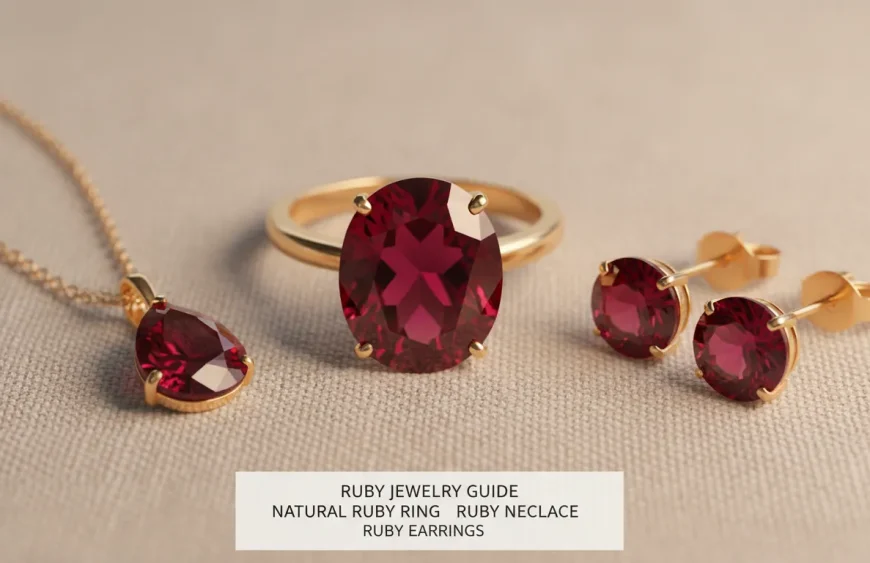
When I first tried on ruby jewelry under natural light, I understood why people call it “alive.” The stone didn’t just look red—it flashed hot pink, deep wine, and a quiet ember tone depending on the angle. If you’ve ever wondered why one ruby ring costs $150 and another costs $15,000, or how to choose a piece that fits your style and your values, you’re in the right place. Let’s walk through what matters most—without the overwhelm.
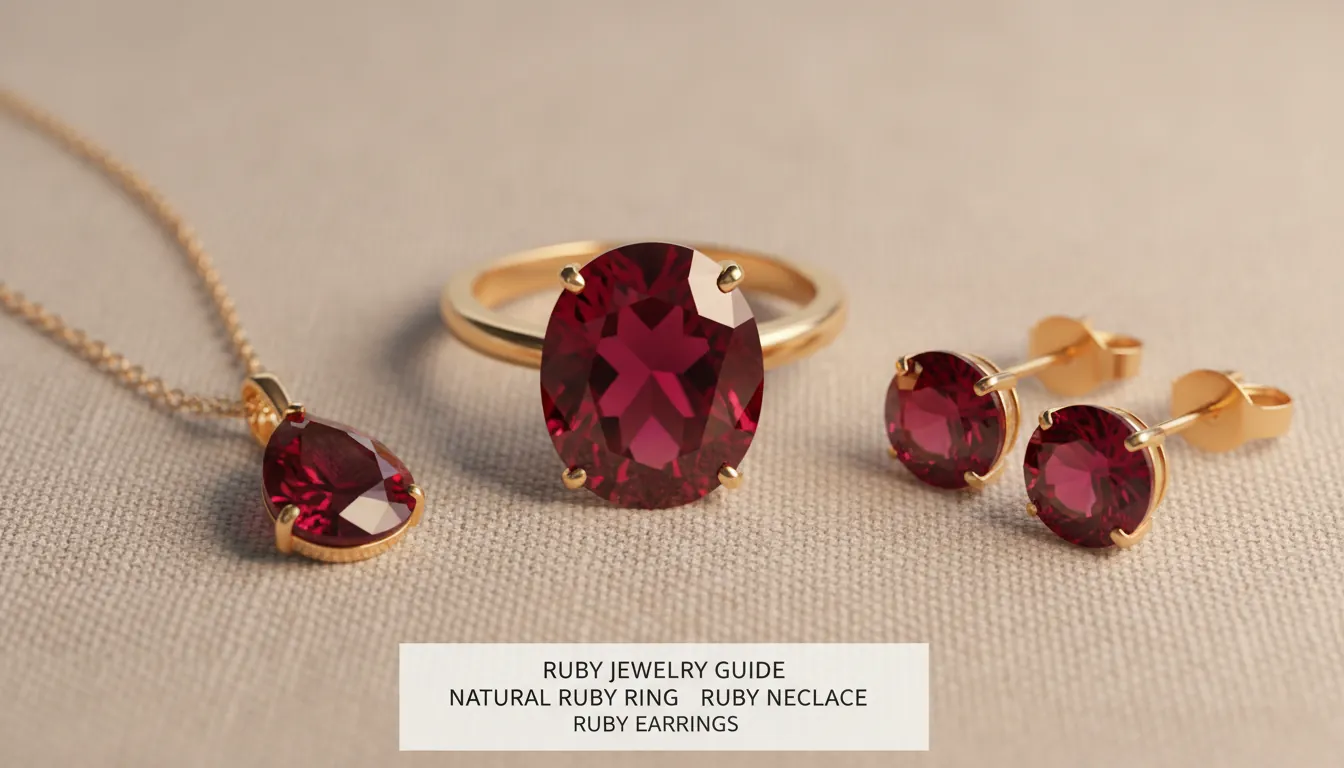
Why Ruby Jewelry Is So Loved (and So Misunderstood)
Ruby has a reputation for passion, confidence, and heart-led energy—yet many shoppers only hear “July birthstone” and stop there. In the jewelry world, ruby is the red variety of corundum, and it’s famously durable for daily wear (hardness 9 on the Mohs scale). That durability is a big reason ruby jewelry shows up in engagement rings, heirlooms, and everyday studs.
From a wellness angle, ruby is often associated with vitality and grounded courage. At StarryBead, we see customers gravitate toward red stones when they want something that feels energizing but still elegant—similar to why people love Red Persian Agate for steady confidence, or Citrine for bright momentum.
Common reasons people choose ruby jewelry:
- To mark love, commitment, or a milestone (anniversary, promotion, “new chapter”)
- For a bold color accent that still reads classic
- For daily-wear durability compared with softer gemstones
- For the symbolic “fire” energy many cultures attribute to ruby
What Determines Ruby Jewelry Quality (The Stuff That Changes the Price)
If you’re comparing ruby rings, ruby necklaces, and ruby earrings online, you’ll notice prices can swing wildly. That’s normal. Here’s what actually drives value in ruby jewelry, explained in plain English.
1) Color: the #1 value driver
The best rubies are vivid, saturated, and not too dark. Many jewelers reference “pigeon blood” as a top color category, though grading terms vary by lab and seller. In practice, you want a red that looks rich in both indoor and outdoor light.
2) Clarity: inclusions are common
Most natural rubies have inclusions (tiny internal features). A ruby that’s perfectly clean can be suspiciously rare—or lab-created. Some inclusions are acceptable and even “characterful,” but avoid stones with cracks that reach the surface, especially for rings.
3) Cut: sparkle and life
Rubies aren’t all cut the same, and cut quality affects brilliance. A well-cut ruby will return light evenly; a poorly cut one can look dark in the center (“extinction”).
4) Carat weight: bigger gets expensive fast
A one-carat ruby isn’t just “twice” the price of a half-carat. With rubies, the price curve can jump steeply as size increases, especially when color is strong.
5) Treatment: heat vs. other enhancements
Many rubies are heat-treated to improve color and clarity; this is widely accepted in the market when disclosed. More intensive treatments (like fracture filling) can reduce value and affect care needs.
For deeper reading on gemstone standards and terminology, see the GIA Ruby Guide and the International Gem Society’s ruby overview.
Natural Ruby vs. Lab-Created Ruby: Which Should You Buy?
This is where people get stuck—and it shouldn’t be complicated. Lab-created ruby is chemically the same as natural ruby, but it’s made in a controlled environment. Natural ruby is formed in the earth and tends to have more unique inclusions and rarity-based value.
Choose natural ruby jewelry if you care about:
- Rarity and long-term collectability
- Natural formation and one-of-a-kind “fingerprint”
- Traditional heirloom value
Choose lab-created ruby jewelry if you care about:
- Larger look for a smaller budget
- High visual consistency
- A lower-cost way to test the style before upgrading
No matter what you choose, insist on clear disclosure and documentation. If you want a baseline on jewelry care and authenticity expectations, the FTC Jewelry Guides are a good reference for truth-in-advertising terms.
| Type | Pros | Cons | Best For | Typical Price Range |
|---|---|---|---|---|
| Natural Ruby | Rarity and long-term value; unique inclusions/character; strong resale/collectibility potential | Highest cost; quality varies widely; must verify origin/treatments; risk of misrepresentation | Fine jewelry, collectors, heirloom pieces | $500–$50,000+ per carat (quality-dependent) |
| Lab-Created Ruby (Synthetic) | Same chemical/physical properties as natural; vivid color and clarity at lower cost; consistent supply and sizes | Lower resale value; still needs clear labeling; some buyers prefer natural rarity | Budget-conscious fine jewelry, larger statement stones, everyday wear | $20–$400 per carat |
| Ruby Look-Alikes (e.g., red spinel, garnet, red sapphire, glass) | Often affordable; can be durable (spinels/sapphires); attractive reds without “ruby” pricing | Not ruby—value and appearance differ; glass/composites can scratch/chip; may require more care; potential confusion in marketing | Fashion jewelry, alternative gemstones, specific shades (burgundy/raspberry) | $10–$1,500+ per carat (material-dependent) |
| Notes (Treatments & Disclosure) | Heat treatment is common and generally accepted; reputable sellers provide lab reports (GIA/AGL/SSEF/GRS) and written disclosures; treatment impacts price | Diffusion, fracture filling with glass/lead (“composite ruby”), dyeing, and coatings can reduce durability/value and must be disclosed; “no heat” premiums apply | Buyers seeking transparency, durability, and fair pricing | Natural heated: typically lower than unheated; glass-filled/composite: often $10–$200 per carat |
Best Types of Ruby Jewelry (and How to Pick One You’ll Wear)
Ruby is striking—but the setting decides whether it becomes your daily signature or stays in the box.
Ruby rings
Rings get the most wear and the most impact. If you’re hard on your hands, consider a bezel or halo for protection. Prongs can look airy and elegant, but they need maintenance checks.
My real-world tip: I’ve seen more chipped gemstones from “high profile” settings than from daily bumps. If you want ruby for everyday, prioritize a secure setting over maximum height.
Ruby necklaces and pendants
A ruby pendant is one of the easiest ways to wear red without feeling “too dressed up.” It sits close to the heart, which many customers love for the symbolic meaning.
Ruby earrings
Studs are timeless and simple. If you want something more expressive, small drops or hoops with ruby accents add movement without overwhelming your look.
Ruby bracelets
Bracelets can be stunning, but they take more knocks. If you want a ruby bracelet for daily wear, look for protected settings and sturdy clasps.
Styling Ruby Jewelry: Modern Looks (Not Just “Formal”)
Ruby doesn’t have to read vintage or ceremonial. You can style ruby jewelry in clean, modern ways—especially if you mix textures.
Easy style formulas:
- Minimalist: ruby studs + plain gold chain + one simple ring
- Soft romance: ruby pendant + pearl accents (Freshwater Pearl pairs beautifully with ruby warmth)
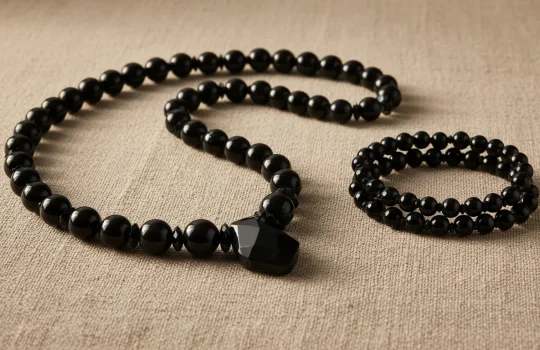
- Grounded bold: ruby ring + Smoky Quartz or Black Tourmaline bracelet for contrast
- Color-play: ruby + Citrine (warm-on-warm) for a confident, sunny palette
If you’re building a “meaningful stack,” StarryBead customers often pair red stones with grounding neutrals for balance. A red focal piece plus Clear Quartz accents is a classic “intentional but wearable” combo.
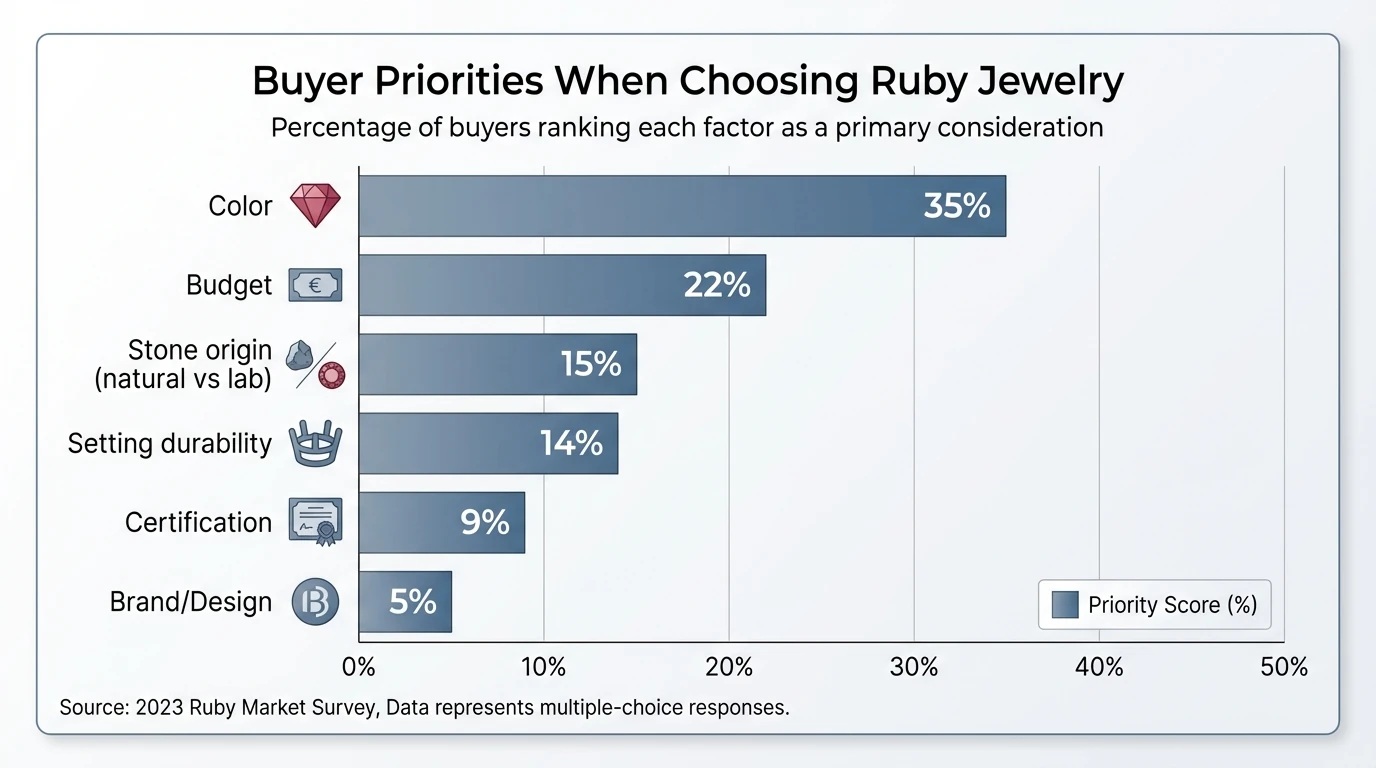
Ruby Jewelry Care: Keep the Fire Without the Damage
Ruby is tough, but your jewelry setting and any treatments still matter. Treat your pieces like “daily luxury”—simple habits go a long way.
Cleaning ruby jewelry safely:
- Use warm water + mild soap + a soft toothbrush.
- Rinse thoroughly and pat dry with a soft cloth.
- Store separately to prevent scratches on softer gemstones.
Avoid:
- Harsh chemicals (especially for plated metals or treated stones)
- Tossing rubies into a mixed jewelry bowl (metal prongs can snag)
- Skipping setting checks on rings you wear often
For a deeper general guide, the GIA jewelry care articles are a reliable reference.
How to Buy Ruby Jewelry Online (Without Regrets)
Buying ruby jewelry online can be amazing—you get selection, pricing, and design variety—but you need a checklist.
Before you click “Add to Cart,” confirm:
- Clear photos/videos in multiple lighting conditions
- Treatment disclosure (heat-treated, filled, etc.)
- Return policy and warranty
- Stone measurements (not just carat weight)
- Any certification or authenticity documentation offered
At StarryBead, authenticity is non-negotiable for natural materials; we provide certificates for our gemstones and crystals, because trust matters when a piece is meant to be both beautiful and meaningful.
Internal reads that help you choose intentionally:
- Gemstone Jewelry Guide: How to Choose the Right Stone
- How to Clean and Care for Crystal Jewelry
- Bracelet Stacking Guide: Balance, Color, and Meaning
Lab Ruby Engagement Rings Buying Guide: Real Value, Ethics & Quality Explained
Ruby Jewelry Gifts: When It’s the “Right Stone”
Ruby is a classic gift, but it’s also a message. I’ve found ruby works best when you want the gift to say: “I see your strength, and I’m celebrating it.”
Ruby jewelry is especially fitting for:
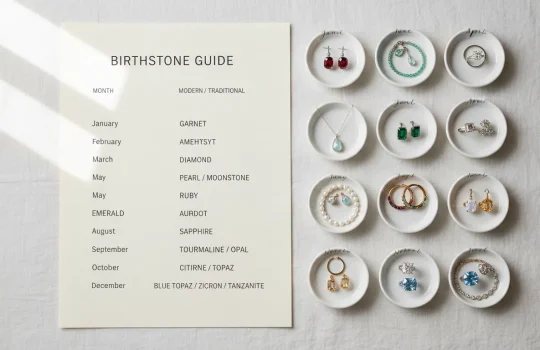
- July birthdays (birthstone)
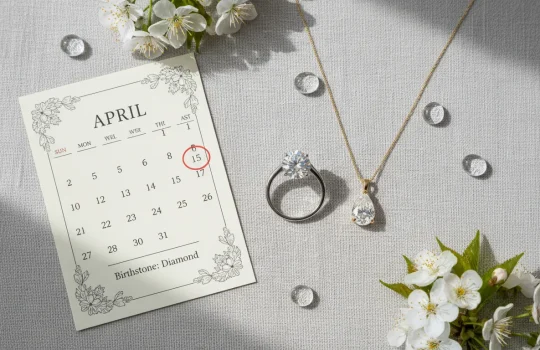
- 15th and 40th anniversaries (traditional ruby milestones)
- New jobs, new businesses, and confidence-building moments
- Romantic gifts that don’t feel generic
If you want a gentler mood than ruby’s bold heat, consider pairing or alternating with softer stones—like Aquamarine for calm clarity or Amethyst for grounded peace.
Conclusion: Let Ruby Jewelry Tell a Braver Story
At the end of the day, ruby jewelry isn’t just a red gemstone in a setting—it’s a small, wearable decision to show up with warmth and courage. Whether you choose a natural ruby with its tiny “life lines,” or a lab-created ruby that delivers bold beauty on a budget, the best piece is the one you actually reach for. If you’re curating jewelry as part of your wellness ritual—getting dressed like you mean it—ruby is a powerful place to start.
📌 Invite readers to explore StarryBead’s handcrafted gemstone jewelry collection, subscribe for style-and-care tips, and comment with what ruby piece they’re considering
FAQ: Ruby Jewelry Questions People Search
1) Is ruby jewelry good for everyday wear?
Yes—ruby is very durable (Mohs 9), making it a strong choice for daily rings, studs, and pendants, especially in protective settings.
2) How can I tell if ruby jewelry is real?
Look for treatment disclosure, reputable seller policies, and documentation. Clear photos, measurements, and certification or authenticity statements help reduce risk.
3) Is lab-created ruby “fake”?
No. Lab-created ruby is real ruby chemically, but it’s grown in a lab rather than formed naturally in the earth. Value and rarity differ.
4) What metal looks best with ruby jewelry?
Yellow gold brings out ruby warmth, white gold/platinum makes it look crisp and modern, and rose gold emphasizes romantic tones.
5) Why is some ruby jewelry so expensive?
Price rises with vivid color, larger size, high clarity, quality cut, rarity, and whether the ruby is natural/untreated.
6) Can ruby jewelry go in an ultrasonic cleaner?
Sometimes, but it depends on treatments and the setting. When in doubt, use warm soapy water and a soft brush to avoid damage.
7) What gemstones pair well with ruby in jewelry?
Diamonds, pearls, Clear Quartz, Smoky Quartz, Citrine, and even Black Tourmaline can create balanced, stylish contrasts depending on the vibe you want.