Carnelian: Meaning, Benefits, and How to Spot a Real Stone (Plus Jewelry Styling Tips)
When carnelian shows up in your day, it rarely whispers. It’s that warm, sunset orange that catches your eye in a tray of stones—like it’s saying, “Pick me if you’re ready to move.” I’ve used carnelian in jewelry designs when customers want something that feels both grounded and energizing, especially for daily wear that has meaning beyond the mirror. But what is carnelian, how do you know it’s real, and how do you wear it without it feeling costume-y?
This guide breaks down carnelian from both the gem-science side and the wellness-jewelry side—so you can buy with confidence, wear it with intention, and care for it properly.
What Is Carnelian? (Quick Science, No Jargon)
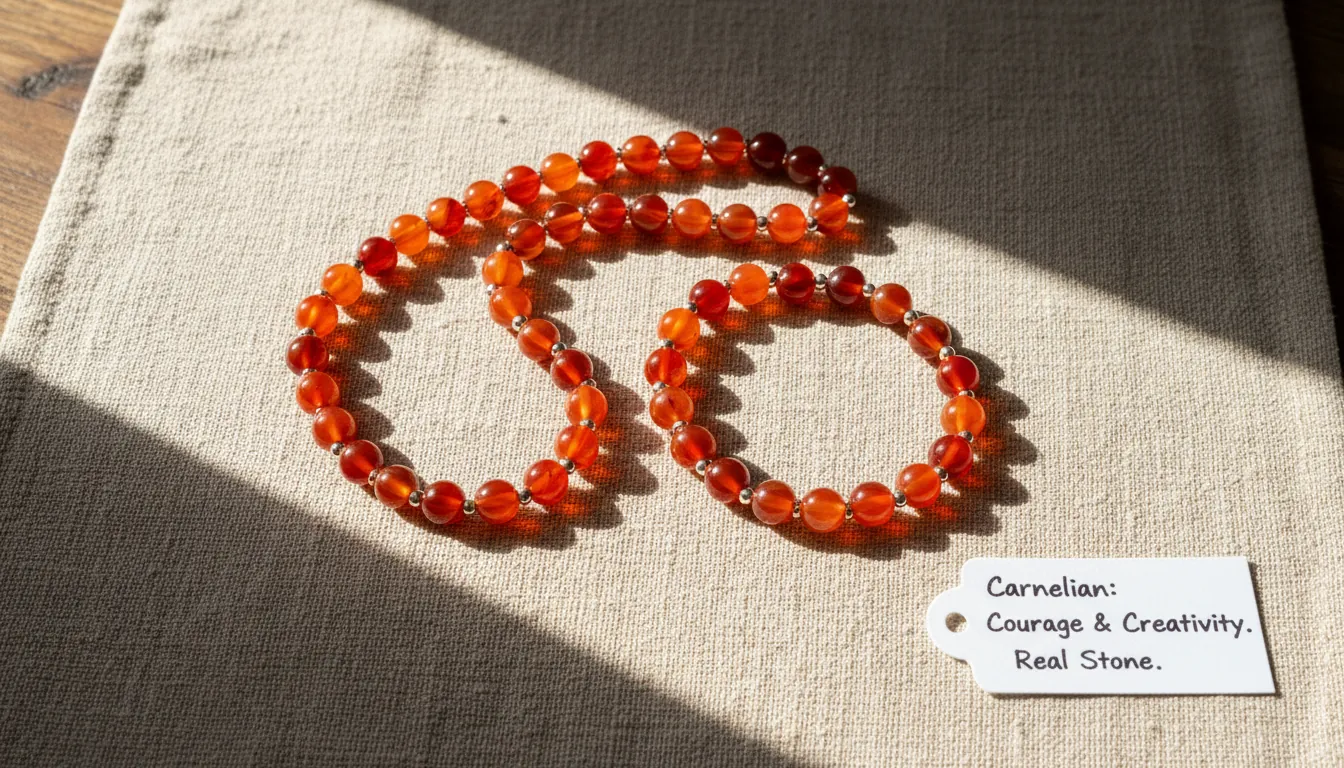
Carnelian is a reddish-orange variety of chalcedony, which is part of the quartz family (silicon dioxide, SiO₂). It’s typically translucent to opaque with a waxy to resinous luster, and it ranks around 6.5–7 on the Mohs hardness scale, making it suitable for everyday jewelry if cared for well. You’ll often see colors that range from yellow-orange to deep rust red, sometimes with brown undertones.
If you like to cross-check facts, these references are solid starting points:
- Carnelian mineral overview (Wikipedia)
- Carnelian history, symbolism, and folklore (International Gem Society)
- Carnelian mineral data and localities (Mindat)
Carnelian vs. Agate vs. Jasper (Why People Mix Them Up)
Carnelian is chalcedony, and so are many agates—so confusion is common. Jasper is also microcrystalline quartz, but it’s usually more opaque and often shows different patterning.
Here’s the practical takeaway when you’re shopping:
- Carnelian: warm, cloudy translucence; smooth color fields are common.
- Agate: banding is common (though not always).
- Jasper: more opaque, often mottled or patterned.
Carnelian Meaning: The “Do the Thing” Stone (In Plain English)
In crystal-wellness circles, carnelian is widely associated with motivation, vitality, confidence, and creative momentum. Many people connect it to the sacral and root chakra themes—grounded energy + forward movement. I’ve found that customers who choose carnelian often describe wanting to feel “more like myself,” especially when they’re starting something new: a job, a healing chapter, a fitness routine, or a creative habit.
To keep it trustworthy: these are traditional and contemporary spiritual interpretations, not medical claims. Think of carnelian as a symbolic tool—a wearable reminder—rather than a cure.
Keyword variations you’ll also see people search for:
- carnelian stone meaning
- carnelian crystal benefits
- red-orange chalcedony
- genuine carnelian jewelry
- carnelian bracelet/necklace meaning
Carnelian Benefits (Practical + Emotional Use Cases)
People reach for carnelian when they want energy that feels steady, not frantic. In my own testing (yes—wearing pieces for weeks, not minutes), carnelian tends to work best when you pair it with a simple intention and consistent wear.
Common ways people use carnelian:
- Confidence support: Wearing carnelian during presentations, interviews, or difficult conversations.
- Creative momentum: Keeping it on during writing, designing, or making music—especially when you feel stuck.
- Grounded motivation: Using it as a “start signal” when procrastination is really fear in disguise.
- Emotional steadiness: A reminder to return to the body, breathe, and keep going.
A simple intention ritual (takes 30 seconds)
- Hold your carnelian in your palm.
- Name one action you’ll take today (small is fine).
- Put the jewelry on and do the action before you overthink it.
Fake vs Real Carnelian | Satin Crystals
How to Tell if Carnelian Is Real (Avoid Dyed Lookalikes)
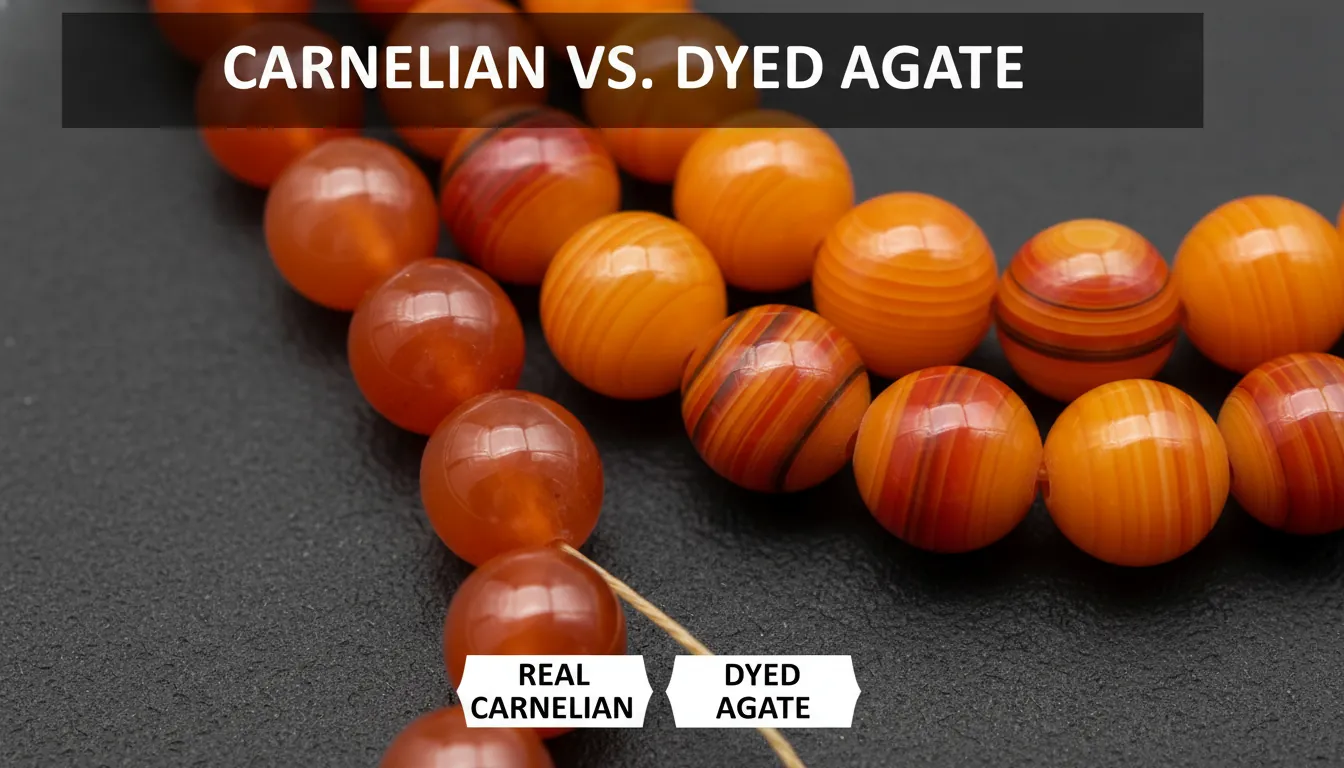
Carnelian is popular and relatively affordable, which unfortunately makes it a frequent target for dyeing and mislabeling. Some sellers pass dyed agate or treated stones as carnelian.
Quick checks you can do at home
- Look for “cloudy depth”: Genuine carnelian often has a soft, slightly cloudy internal look rather than harsh, inky color.
- Watch for strong banding: Clear stripes can be a clue you’re looking at dyed agate (not always, but often).
- Check the surface color concentration: Dye sometimes settles in cracks or drill holes.
- Feel the temperature: Stone tends to feel cool to the touch initially; plastic/resin warms quickly (not foolproof, but helpful).
| Check | Real Carnelian Tends To Look Like | Possible Fake/Treated Signs | What To Do Next |
|---|---|---|---|
| Translucency | Semi-translucent to translucent; light passes through edges with a warm orange-red glow; depth/soft cloudiness | Completely opaque, flat color; overly glassy/clear like bottle glass; “too perfect” uniform translucency | Shine a flashlight through the thinnest edge; compare multiple angles; if uncertain, request seller translucency photos in backlight |
| Banding | Usually minimal/soft zoning; may show subtle wisps or internal gradients rather than strong stripes | Strong, sharp banding typical of dyed banded agate; very high-contrast lines; color pooling along bands | Inspect under bright light and loupe; if banded, ask if it’s dyed agate; consider lab check if high value |
| Drill-hole color | Color continues into the hole; interior shows similar tone with natural variation; no obvious staining | Darker/orange dye concentrated in drill holes and crevices; bright “ring” or uneven staining near the hole | Use a loupe; wipe hole area with a cotton swab slightly dampened with isopropyl alcohol (if safe for setting); stop if color transfers and avoid vendor |
| Surface scratches | Hard (Mohs ~6.5–7); resists casual scratching; minor wear looks fine and not “gouged” easily | Scratches very easily (plastic/resin); soft, smeary gouges; dull, waxy feel; visible mold lines | Do a careful fingernail/coin scratch test only on an inconspicuous area; if it marks easily, treat as imitation |
| Pricing / red flags | Moderately priced; consistent with size/clarity; seller provides origin/treatment info and clear photos | Very cheap for large, vivid pieces; vague listings (“red jade,” “natural gemstone”); intense neon orange-red; no disclosure | Compare with reputable dealers; ask directly about dye/heat treatments; buy from sellers with return policy or independent verification |
The authenticity question that matters most
If you’re buying carnelian jewelry online, look for:
- Clear product photos in natural light
- A stated policy on treatments (dye/heat)
- Proof of authenticity (for example, certificates)
At StarryBead, our positioning is simple: 100% natural crystals and gemstones with certificates to support authenticity, plus fast support and perks like free shipping over $99. If you’re building a “daily energy” jewelry wardrobe, that reliability saves you from second-guessing every bead.
Carnelian Jewelry: How to Wear It Without Overthinking
Carnelian’s color does the heavy lifting, so the styling works best when the shapes are clean. I usually recommend treating it like a warm-toned “power neutral.”
Easy styling combos:
- Minimalist look: carnelian + gold-filled or vermeil accents; white tee; warm-toned makeup.
- Earthy look: carnelian + smoky quartz or green jasper for grounded, natural palettes.
- Bright look: carnelian + citrine for a sunshine-forward stack that still feels grown-up.
- Contrast look: carnelian + black tourmaline for bold, anchored energy.
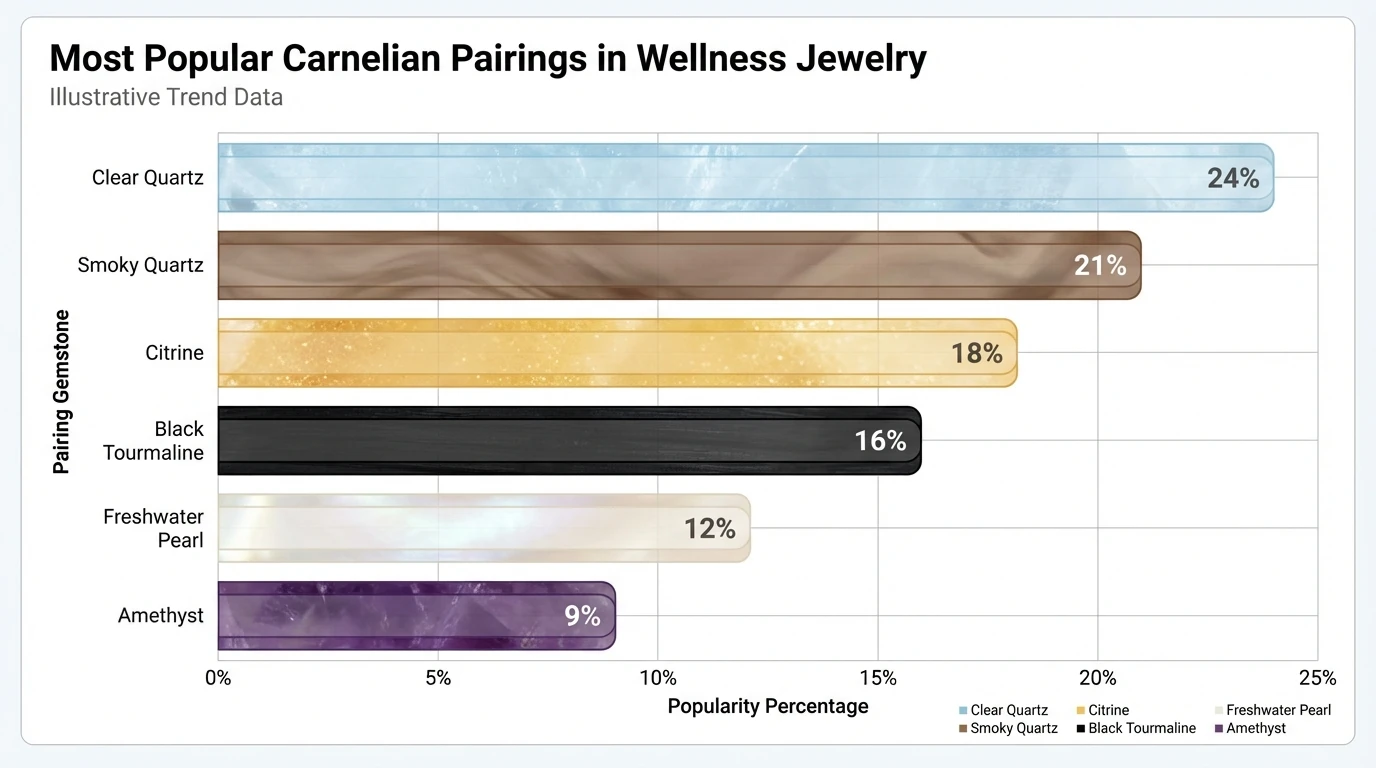
If you’re browsing complementary stones, you may like guides on Citrine, Smoky Quartz, or Black Tourmaline—they’re frequent pairings with carnelian in wellness jewelry. (If you share your StarryBead internal URLs, I’ll weave in the most relevant internal links naturally.)
Best Stone Pairings With Carnelian (Energy + Aesthetics)
When customers ask me “What should I pair with carnelian?” I think in two tracks: color harmony and intention harmony.
Top pairings:
- Clear Quartz: amplifies and clarifies—great if you want carnelian’s “go” energy to feel more focused.
- Smoky Quartz: adds grounding and calm; good for anxiety-prone motivation.
- Citrine: optimistic, confident warmth; ideal for public-facing work.
- Black Tourmaline: protective feel and strong contrast; great for commuting or crowded environments.
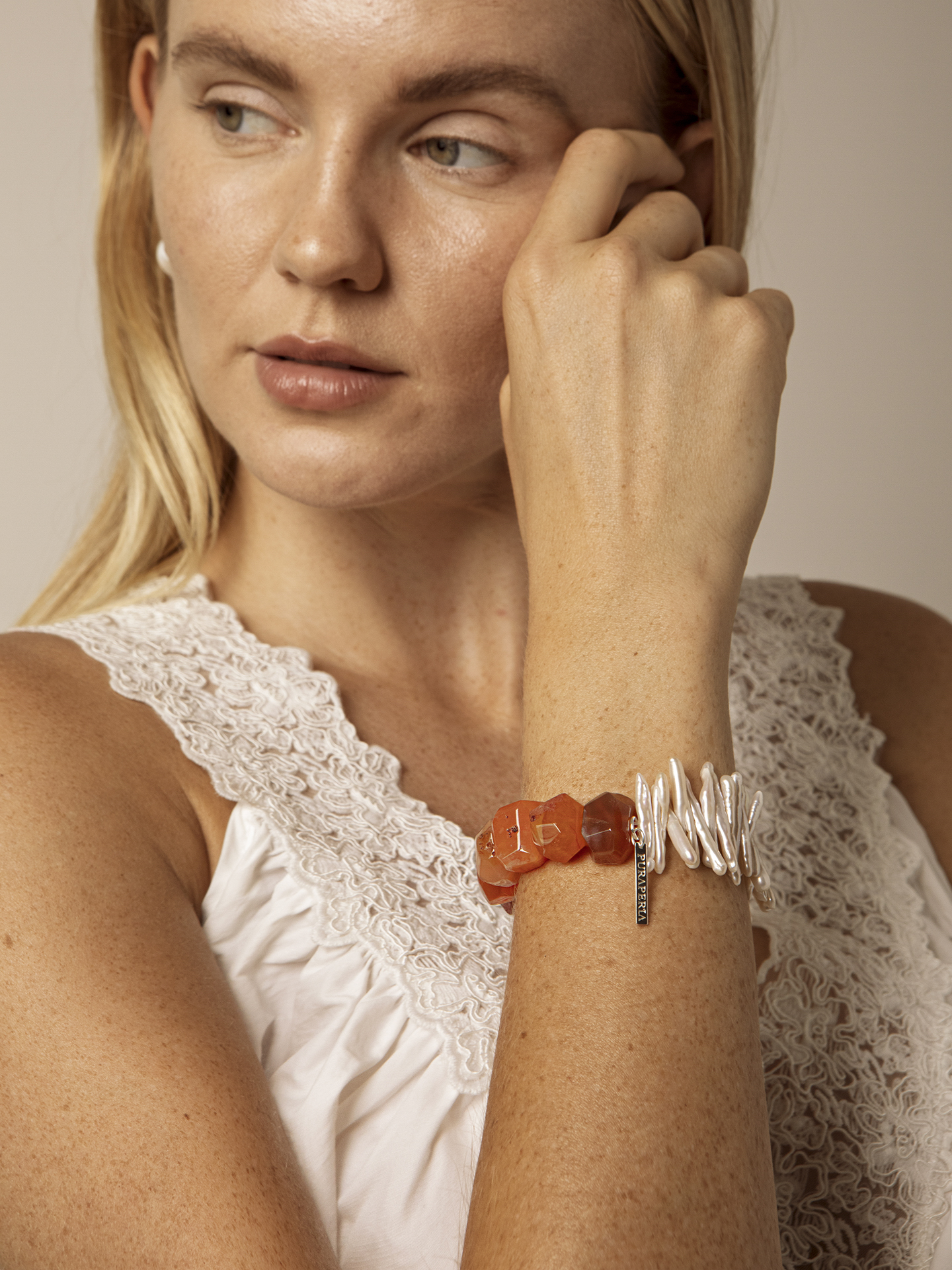
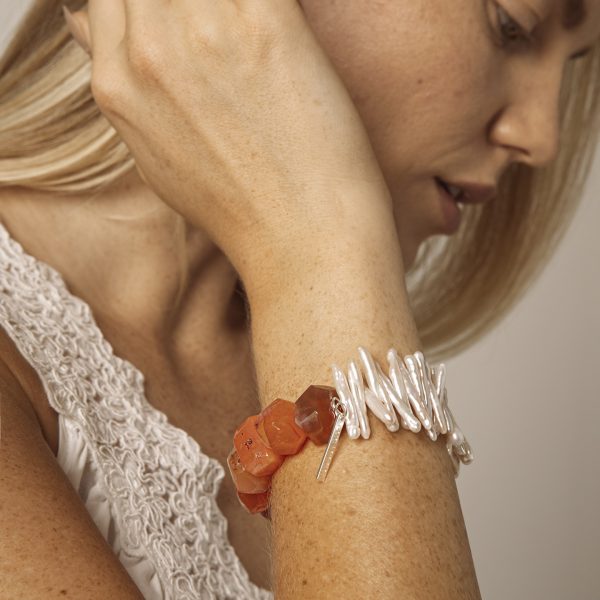
- Freshwater Pearl: softens the palette; makes carnelian look refined and modern.
Carnelian Care: Keep the Glow, Don’t Overdo the Cleaning
Carnelian is durable, but it’s not indestructible—especially in jewelry form where it meets skin oils, perfume, and hard surfaces.
Basic care rules:
- Remove carnelian jewelry before gym sessions, hot tubs, cleaning, and sleep.
- Clean with lukewarm water, mild soap, and a soft cloth.
- Avoid long exposure to harsh chemicals and ultrasonic cleaners (especially if the piece has delicate settings).
Cleansing for wellness users (optional)
If you treat carnelian as an intention stone, gentle methods are best:
- Smoke cleanse (incense)
- Sound (singing bowl)
- Moonlight (short exposure)
Buying Carnelian: What Good Quality Looks Like
Not all carnelian is equal. The most wearable, “luxury-looking” pieces tend to have:
- Even color with natural depth (not flat neon)
- Good polish (smooth luster without dull patches)
- Thoughtful bead matching in a strand (consistent tone and size)
- Secure stringing and finishing (the hidden part of craftsmanship that matters most)
If you’re shopping from a wellness/fashion accessories brand like StarryBead, prioritize build quality as much as stone quality. A real carnelian bead on weak stringing still won’t become a daily favorite.
Conclusion: Let Carnelian Be Your “Start” Signal
Carnelian has a way of turning “someday” into “today.” It’s scientifically a beautiful, durable chalcedony—and symbolically a stone many people use for confidence, motivation, and creative momentum. If you choose it intentionally, verify authenticity, and wear it in a style that fits your life, carnelian becomes more than a color—it becomes a cue.
If you’ve worn carnelian before, share what you noticed—did it feel energizing, grounding, or simply comforting? And if you’re ready to build a meaningful everyday stack, explore StarryBead’s handcrafted natural gemstone pieces and find the carnelian design that matches your story.
FAQ About Carnelian
1) What is carnelian stone used for?
Carnelian is commonly used in jewelry and decorative carving. In wellness traditions, it’s used as a symbolic support for motivation, vitality, and confidence.
2) Is carnelian a real gemstone or a crystal?
Carnelian is a gemstone variety of chalcedony (microcrystalline quartz). Many people also call it a crystal in the broader wellness sense.
3) How can you tell if carnelian is real?
Look for cloudy depth and natural translucence, and be cautious with harsh banding or dye concentration near drill holes. Buy from sellers who disclose treatments and provide authenticity documentation.
4) Can I wear carnelian every day?
Yes—carnelian is around 6.5–7 on the Mohs scale, so it’s generally suitable for daily wear. Remove it for heavy impact activities and chemical exposure.
5) Does carnelian fade in sunlight?
Extended, intense sun exposure can affect some stones over time. For best results, store carnelian away from prolonged direct sunlight when you’re not wearing it.
6) What stones pair well with carnelian jewelry?
Clear quartz, smoky quartz, citrine, black tourmaline, and freshwater pearl are popular pairings for both style and intention.
7) Is carnelian expensive?
Carnelian is usually one of the more affordable gemstone options, but price varies based on color quality, craftsmanship, size, and whether the piece is handcrafted with premium materials.