Jewellery Moonstone Guide: How to Choose, Style, and Care for the Stone of Intuition
When I first held a piece of jewellery moonstone under a desk lamp, it didn’t “sparkle” like diamond—it glowed. The light seemed to move inside the stone like moonlight on water, and suddenly I understood why people reach for moonstone when they want calm, clarity, and a little mystery in their everyday style. If you’ve been wondering what makes moonstone special, how to spot the real thing, or which setting actually holds up to daily wear, this guide is for you.
What Is Jewellery Moonstone (and Why Does It “Glow”)?
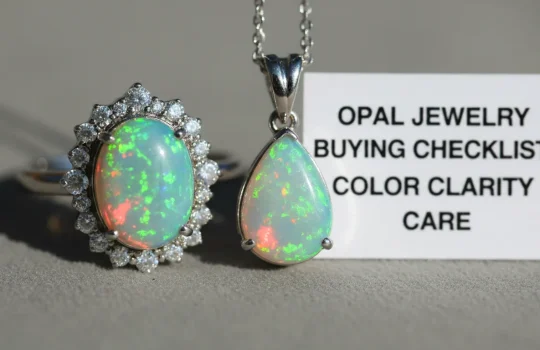
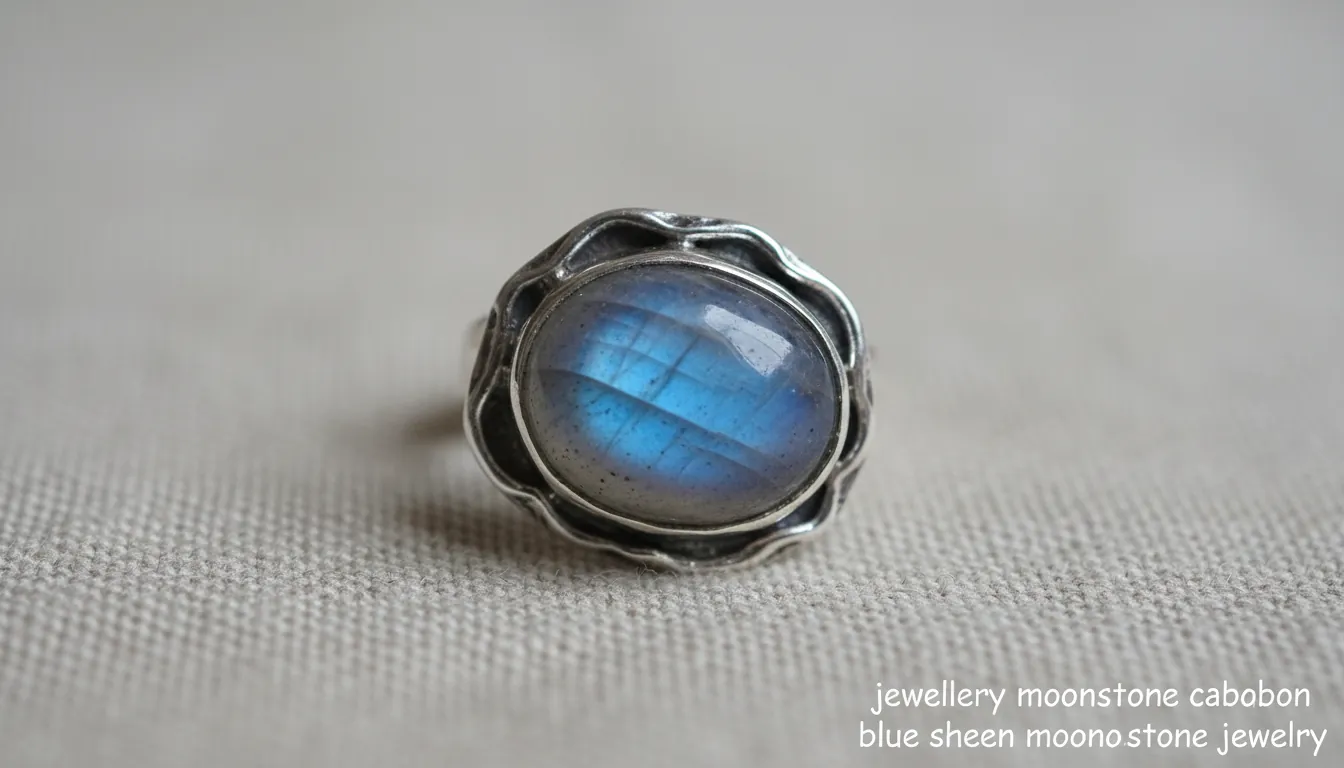
Jewellery moonstone is made with moonstone, a feldspar mineral (commonly orthoclase) known for adularescence—that floating, bluish sheen that appears to drift across the surface as the stone moves. This effect comes from light scattering between internal layers, which is why well-cut cabochons often look more “alive” than flat cuts. Gemologically, moonstone is typically around Mohs 6, and it has perfect cleavage, which matters a lot for durability in rings.
If you enjoy the meaning side of gemstones, moonstone is widely called the Stone of Intuition and is often associated with emotional balance and inner guidance. In my experience designing and wearing crystal jewelry, moonstone is one of the few stones that reads as both softly spiritual and modern-minimal—it works with a hoodie or a silk dress.
- Key visual trait: drifting glow (adularescence)
- Best cut for glow: cabochon
- Wear consideration: moderate hardness + cleavage = treat gently, especially in rings
For deeper gem background, see International Gem Society’s moonstone guide and the care notes from Lang Antiques’ Moonstone overview.
Moonstone Meanings: Wellness Symbolism Without the Hype
Many wearers choose jewellery moonstone for its symbolism: intuition, calm, and emotional steadiness. I’ve found moonstone especially popular with customers who want jewelry that feels like a “reset button” during busy seasons—new jobs, travel, relationship shifts, or simply a desire to feel more centered. While gemstones aren’t medical treatment, they can be powerful as ritual objects—a tactile reminder to breathe, reflect, and move with intention.
Common moonstone associations include:
- Intuition and inner compass (making decisions with less second-guessing)
- Emotional balance (a sense of gentle steadiness)
- Protection during transitions (new beginnings and change)
Types of Moonstone Used in Jewelry (And What to Buy)
Not all moonstone looks the same, and that’s where buyers get stuck. Here’s a practical breakdown of what you’ll see online and in boutiques, plus what it means for price and appearance.
1) White / “Rainbow” Moonstone
Often appears milky-white with blue flashes; sometimes shows subtle rainbow tones. Many pieces labeled “rainbow moonstone” are actually white labradorite in trade usage—still beautiful, but it’s worth asking for clarity and documentation.
2) Blue Moonstone
This is the classic “blue sheen” look people picture—clean body color with strong blue adularescence. Stronger, more centered glow usually increases value.
3) Peach / Gray Moonstone
Warmer and moodier body colors, often with softer sheen. These can be incredible for boho styling and autumn palettes.
4) “Royal Blue” and Premium Selections
Some sellers use terms like “royal blue moonstone” to indicate standout glow or color; always judge by video-in-light and return policy more than marketing names.
How to Choose Jewellery Moonstone: A Buyer’s Checklist
When you’re shopping for jewellery moonstone, focus on what you can verify visually and structurally. I use the same checklist when sourcing stones for handcrafted pieces: glow, clarity, cut, and setting strength.
- Adularescence intensity
Look for a glow that’s visible in normal lighting—not only under studio lights. - Body color and transparency
A cleaner, less cloudy body often looks more “luminous,” but cloudy stones can feel dreamy and soft. - Cut quality
Cabochons should be symmetrical with a smooth dome; the glow should “travel” across the top. - Surface durability
Inspect for scratches; moonstone can mark easier than sapphire or quartz. - Setting choice
If you’re hard on jewelry, prefer a bezel or protective prongs—especially for rings.
| Quality Factor | What to Look For | Common Red Flags | Best Jewelry Types (ring/necklace/earrings/bracelet) | Price Impact (low/medium/high) |
|---|---|---|---|---|
| Adularescence (blue sheen) | Strong, even blue glow that moves smoothly across the surface | Dull/patchy sheen, “flat” look, grey/brown cast | Necklace, earrings | High |
| Transparency & body color | Transparent to semi-transparent with near-colorless body; minimal haze | Milky/opaque stone, heavy cloudiness, strong yellow/grey body | Earrings, necklace | Medium |
| Cut & orientation | Cabochon with high dome; sheen centered and visible face-up | Sheen off-center, low dome, windowing, dead spots | Ring, necklace | High |
| Clarity & inclusions | Clean appearance to the eye; only minor internal veils typical of moonstone | Large cracks, black spots, surface-reaching fractures | Necklace, earrings | Medium |
| Durability & setting quality | Protective settings (bezel/halo), smooth finish, secure prongs; avoid exposed edges | Very thin edges, loose prongs, sharp corners, poor polish | Bracelet (only if well-protected), ring (protective setting) | Medium |
| Treatment & authenticity | Disclosed treatments; reputable seller; lab report for higher spends | Undisclosed coating/dye, “rainbow moonstone” sold as moonstone, no return policy | All types | Medium |
Best Settings for Moonstone (Rings vs Necklaces vs Earrings)
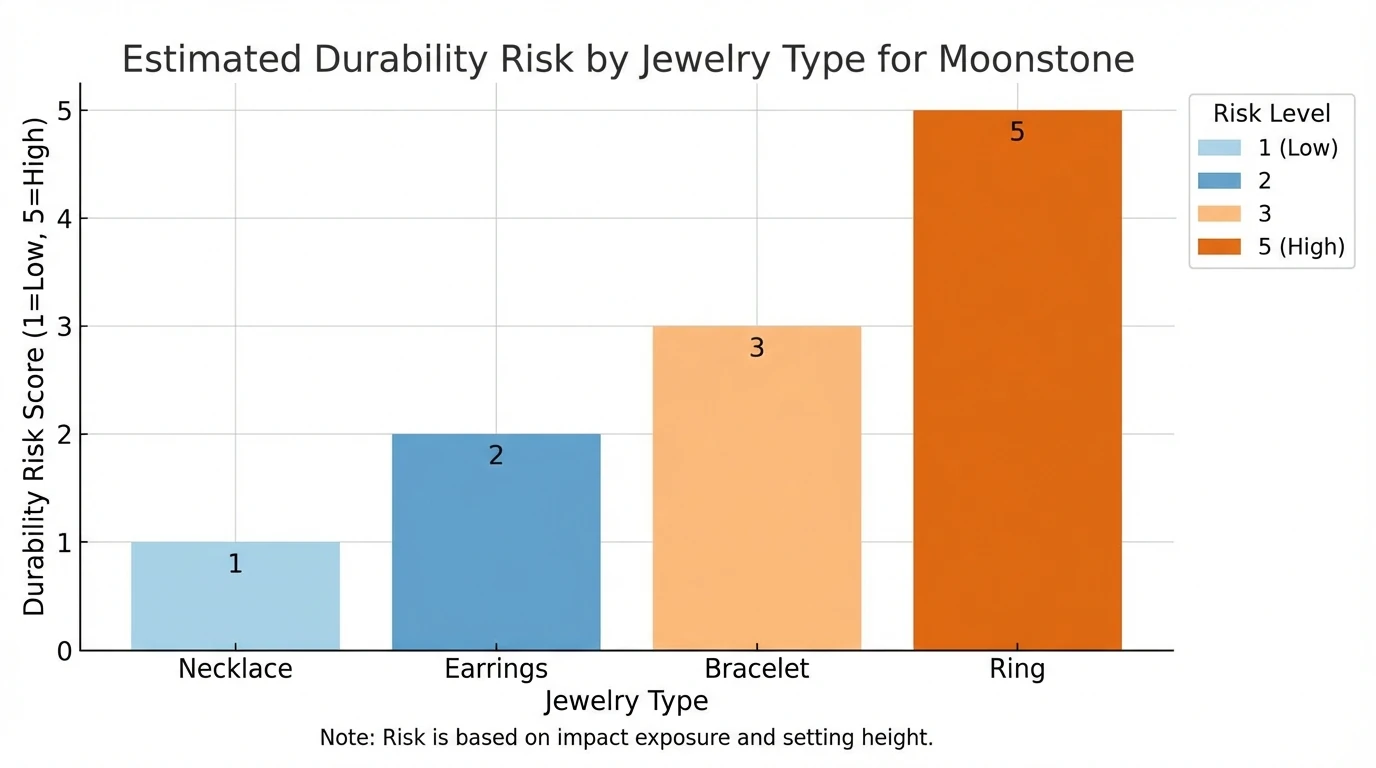
Because moonstone has perfect cleavage, the setting matters as much as the stone. I’ve seen gorgeous moonstones chipped from a single knock on a countertop—usually in high-exposure ring designs.
- Rings: Choose bezel settings or low-profile prongs; avoid tall, exposed crowns for daily wear.
- Necklaces: Safest for longevity; pendants protect the stone naturally with less impact risk.
- Earrings: Great for sparkle-and-glow; studs and small drops are easy daily staples.
- Bracelets: Lovely, but higher bump risk—choose stones that sit slightly recessed.
How to Tell If Moonstone Jewelry Is Real (Simple, Practical Steps)
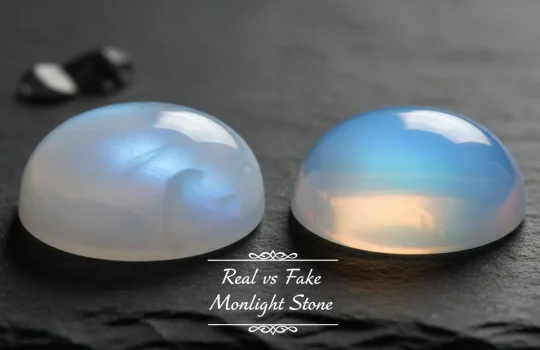
The most common issues are mislabeling (moonstone vs labradorite), glass imitations, and unclear origin/treatment disclosure. You don’t need lab gear to shop smarter—just a few checks.
- Ask for a short video in natural light showing the moving sheen.
- Look for documentation (authenticity certificate, materials list, stone type).
- Check the price logic: ultra-low prices paired with “premium blue moonstone” claims are a red flag.
- Inspect the glow behavior: adularescence should look like a soft internal light, not glittery sparkle.
For a deeper dive into evaluation and pricing, I recommend IGS’s buying and value guidance.
Moonstone Care: Keep the Glow, Avoid the Chips
Moonstone is stable in light but not a fan of heat, harsh chemicals, or ultrasonic cleaners. If you want your jewellery moonstone to keep that glassy dome and glow, treat it like a delicate favorite rather than a “gym ring.”
- Clean with warm soapy water and a soft cloth.
- Avoid ultrasonic and steam cleaning (generally not safe for moonstone).
- Store separately to prevent scratches from harder stones (like quartz, topaz, sapphire).
- Remove before heavy chores, workouts, or anything with impact risk.
These care notes align with established gem care guidance such as Lang Antiques’ moonstone care recommendations.
Styling Jewellery Moonstone: From Minimalist to Mystical
Moonstone is a rare stone that can look clean and modern or romantic and celestial depending on how you style it. In my own wear tests, moonstone shines when you give it visual “space”—simple metals, clean necklines, and layered neutrals.
Try these easy pairings:
- Minimal everyday: moonstone stud earrings + plain chain necklace
- Soft statement: moonstone pendant over a monochrome outfit (black, cream, slate)
- Layered energy stack: moonstone + Clear Quartz for clarity vibes, or moonstone + Black Tourmaline for a grounded look
- Warm palette: moonstone + Citrine or Freshwater Pearl for sunny, elegant contrast
If you’re building a gemstone wardrobe, explore complementary stones and styling ideas in StarryBead’s guides: crystal jewelry care tips, how to layer necklaces, and gemstone authenticity certificates explained.
Why StarryBead Chooses Moonstone (And Who It’s Best For)
At StarryBead, jewellery moonstone fits our sweet spot: beauty with meaning. We work with natural crystals and provide authenticity certificates because trust matters—especially with stones that are frequently mislabeled online. Moonstone is a top pick if you want jewelry that feels personal, calming, and quietly luminous without shouting for attention.
Moonstone tends to resonate most with people who:
- want a daily reminder to slow down and listen inward
- love soft glow over high sparkle
- prefer handcrafted design with natural variation (no two stones look identical)
Real or Fake? How to Spot the Difference of Moonstone with Karen Hui
FAQ: Jewellery Moonstone Questions People Ask Before Buying
1) What does jewellery moonstone symbolize?
It’s commonly associated with intuition, emotional balance, and protection during new beginnings or life transitions.
2) Is moonstone durable enough for everyday rings?
It can be, but it’s riskier than harder stones. Choose a bezel/low profile setting, remove it for chores, and avoid impacts.
3) How do I clean moonstone jewelry safely?
Use warm soapy water and a soft cloth. Avoid ultrasonic cleaners, steam, and harsh chemicals.
4) What’s the difference between rainbow moonstone and moonstone?
The trade name “rainbow moonstone” is often used for white labradorite. Ask the seller to specify the mineral and provide documentation.
5) Why does my moonstone look cloudy?
Natural inclusions and layered structure can create a misty look. Cloudiness can be normal and sometimes enhances the dreamy aesthetic.
6) Does moonstone change color in different light?
Yes—adularescence shifts with angle and light source, which is part of its charm.
7) What metal looks best with jewellery moonstone?
Sterling silver and white gold emphasize the cool glow; yellow gold adds warmth and a vintage feel. Pick based on your wardrobe undertones.
Conclusion: Let Jewellery Moonstone Tell a Softer Story
Jewellery can be loud, but jewellery moonstone is a whisper—steady, luminous, and surprisingly expressive when the light hits just right. If you’re craving a piece that feels like a small nightly ritual you can wear in daylight, moonstone is an easy yes. Explore pieces that protect the stone, honor its natural glow, and match how you actually live.