A moonstone doesn’t just sit in a jewelry box—it seems to hold a small weather system of light, shifting as you move. The first time I set a moonstone cabochon under my bench lamp, I understood why so many people ask about moonstone stone meaning: it looks alive, like it’s answering you back. Is it a love stone, a dream stone, a traveler’s charm, or simply a beautiful feldspar with a rare glow? Let’s unpack the symbolism across history and culture—without losing the magic that draws people in.

What “moonstone stone meaning” usually points to (in plain words)
Across traditions, moonstone stone meaning circles four core themes:
- Intuition and inner knowing (the “listen inward” stone)
- Cycles and new beginnings (the moon’s phases as a life metaphor)
- Love, tenderness, and emotional balance (softening sharp edges)
- Protection for night travel (the classic “traveler’s stone” lore)
In modern crystal culture, you’ll also hear moonstone called the Stone of Intuition and a support for emotional harmony and dreamwork. That language is spiritual, not medical—but it’s part of why moonstone remains a favorite in wellness jewelry.
The science behind the glow (and why it shaped the myth)
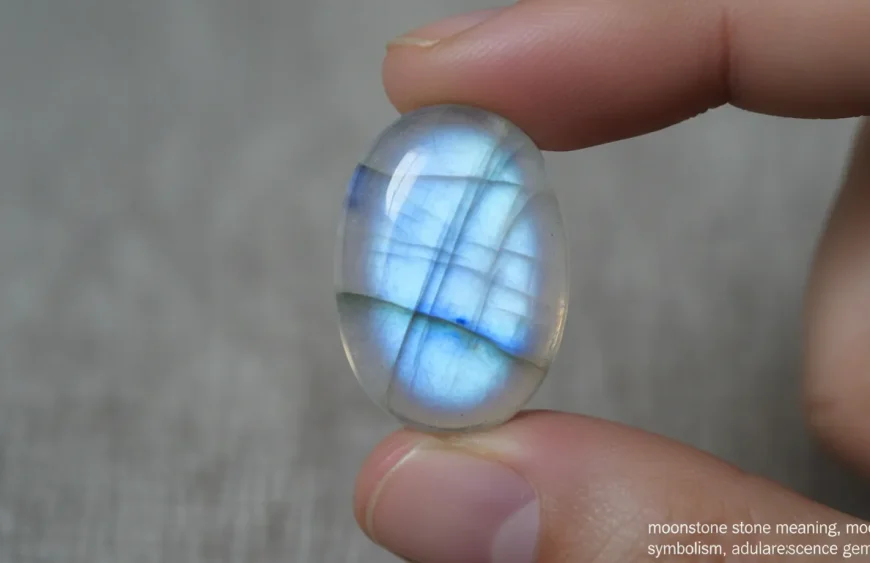
Moonstone is a variety of feldspar, most prized for an optical effect called adularescence—that floating, moonlit sheen that seems to roll beneath the surface. Mineralogically, it’s commonly associated with layered structures (often orthoclase and albite) that scatter light, creating that signature “inner glow.”
That physical glow matters because people build meaning from what they can see. When a gem appears to wax and wane as you tilt it, it’s easy to understand why Romans and Hindus described it as solidified moonlight—a story echoed in multiple historical summaries and lore collections.
Authoritative reading:
- GIA gemstone encyclopedia (for gem basics and optical phenomena context)
- Britannica: Feldspar (for mineral family background)
- Smithsonian National Museum of Natural History (for reputable mineral and gem learning resources)
Moonstone symbolism in India: sacred “dream stone” energy
In Indian tradition, moonstone is often described as sacred—connected to lunar divinity (commonly linked in lore to Chandra, the moon deity). Stories portray it as a stone of good fortune, love, and new beginnings, sometimes given as a wedding gift or worn in rituals tied to fertility and devotion.
In practice (and in the way customers talk about it today), this becomes a simple intention:
- “Help me stay calm during change.”
- “Help me trust myself.”
- “Help me soften, not shut down.”
If you like going deeper on how meaning meets real-life wearability, StarryBead’s longer guide is useful: Moonstones: Meaning, Real vs Fake, Value, and How to Wear This Glowing Gemstone.
Greek and Roman culture: Diana, prophecy, and the “traveler’s stone”
Ancient Roman writers and later retellings often repeat the belief that moonstone formed from solidified moonbeams and carried the favor of Diana, goddess of the moon. Greek traditions also link moonstone to lunar goddesses and to heightened perception—sometimes framed as prophecy or “second sight.”
A theme that shows up across regions is moonstone as a protective night-travel amulet—especially meaningful in a world where traveling after dark was genuinely dangerous. Symbolically, moonstone becomes a promise: You can move through uncertainty and still find your way.
Moonstone across Asia: luck, sleep, and the moon’s rhythm
In broader Asian folklore, moonstone appears as a good-luck charm and a support for restful sleep and calm. Whether or not you take those claims literally, the symbolism is consistent: moonstone is associated with quieting the mind, smoothing emotional static, and syncing with the rhythm of the week and moon (you’ll sometimes see Monday associations because of “moon day” traditions).
If you’re building a calming corner at home, moonstone meaning is often translated into placement ideas:
- On a bedside table for a softer wind-down routine
- On a desk as a reminder to focus gently (especially for creative work)
- In a spot where moonlight naturally hits, if you enjoy lunar rituals

Modern spiritual meaning: what people use moonstone for now
Today, moonstone is widely used in wellness jewelry and spiritual routines for intentions like:
- Emotional balance during stress or transitions
- Intuition when making decisions (less overthinking, more inner clarity)
- Dreamwork and reflective journaling
- New beginnings (moves, career shifts, relationship resets)
In my own crafting and wear-testing, I’ve noticed moonstone is the piece people reach for when they want something that feels soft but steady. It’s not “loud energy.” It’s more like a gentle cue: pause, breathe, choose again.
For a practical wear/care angle, this internal guide fits naturally here: Jewellery Moonstone Guide: How to Choose, Style, and Care for the Stone of Intuition.
Moonstone meaning by type: “moonstone” vs “rainbow moonstone”
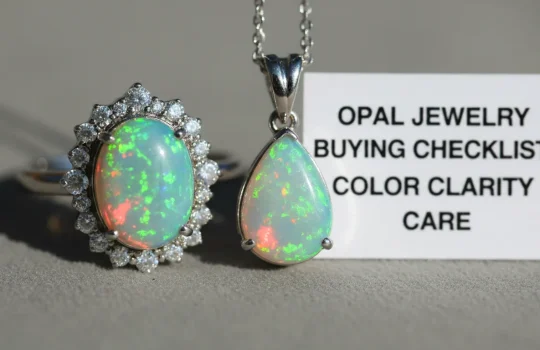
A quick, common confusion: rainbow moonstone is often sold under the moonstone umbrella, but many gem references classify it as white labradorite (also feldspar). Both can show a beautiful glow, but the look and energy symbolism people attach can differ.
Here’s a practical comparison you can use while shopping.
| Feature | Classic Moonstone (Orthoclase Feldspar) | “Rainbow Moonstone” (Often White Labradorite) |
|---|---|---|
| Typical look | Milky body with a floating blue/white sheen (adularescence) | More colorful flashes (often blue, rainbow-like) |
| Common symbolism | Intuition, emotional balance, cycles, new beginnings | Protection, aura “shielding,” intuitive clarity (modern associations) |
| Best jewelry vibe | Soft, romantic, minimal, luminous | Bold flashes, high-contrast, statement glow |
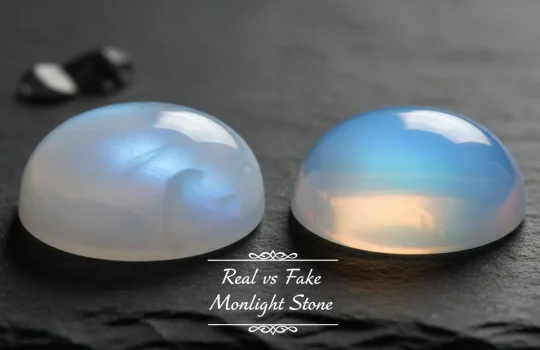
| Shopping tip | Look for a centered sheen and good translucency | Look for strong flashes without dull gray haze |
If you love that “holds light” aesthetic, you may also enjoy this related explainer: Opalescent Stone: Meaning, Types, and How to Choose One That Actually Glows.
MOONSTONE – The Mineral Known for Its Magical Adularescence
What are the benefits of wearing moonstone? (grounded answer)
People often describe the benefits of wearing moonstone in three layers:
- Style benefit: it flatters most skin tones and outfits because the glow acts like a neutral with dimension.
- Routine benefit: it becomes a wearable reminder to slow down, reflect, and act with intention.
- Spiritual benefit (belief-based): it’s linked to intuition, emotional harmony, and new beginnings.
If you’re wearing moonstone for wellness, I suggest a simple test: wear it for two weeks during a specific season of life (busy work sprint, breakup recovery, new job), and journal what changes—not what you hope changes.
Who should not wear moonstone? (practical + personal)
There’s no universal rule, but moonstone may not be a fit if:
- You dislike stones that feel subtle (you may prefer bolder “grounding” stones like black tourmaline or smoky quartz).
- You’re shopping for a stone that signals high-energy confidence; moonstone is typically read as soft, reflective energy.
- You’re expecting guaranteed outcomes—crystals are best treated as supportive tools, not promises.
If you’re highly sensitive to symbolism, you can also choose moonstone only for aesthetic reasons. That’s valid—beauty is its own kind of medicine.
What zodiac is moonstone good for?
In modern astrology circles, moonstone is commonly associated with Cancer (lunar themes), and often recommended for Pisces and Scorpio as well because of the emotional and intuitive symbolism. You’ll also see it suggested for anyone navigating a major life transition—regardless of sign—because moonstone stone meaning is so tied to cycles and change.
How to use moonstone at home (without overcomplicating it)
If you liked the idea of placement for calm and focus, here’s a simple, realistic setup:
- Bedroom: small tumbled moonstone on a nightstand to anchor a wind-down habit (reading, breathwork, journaling).
- Desk: a polished stone near your keyboard as a cue to check in before reacting to messages.
- Entryway: one piece near where you drop keys—symbolically “resetting” as you enter and leave.
Keep it clean and chip-safe; moonstone jewelry and stones can scratch if tossed into a hard bowl with keys.

Conclusion: the meaning that lasts after the glow
Moonstone stone meaning has survived centuries because it matches real life: we all move through phases, we all need calm during change, and we all want to trust our inner voice a little more. When you wear moonstone, you’re not just wearing a pretty gem—you’re wearing a story about cycles, intuition, and starting again, even if it’s just a quiet restart on a Monday morning. If you’ve ever felt pulled to moonstone, chances are you’re in a chapter that wants softness and strength.
FAQ: Moonstone stone meaning (People Also Ask)
1) What does moonstone symbolize spiritually?
It’s most often linked to intuition, emotional balance, and new beginnings, echoing lunar cycles.
2) What are the benefits of wearing moonstone?
People wear it for its calming symbolism, reflective “intuition” theme, and versatile glow in everyday style.
3) Who should not wear moonstone?
Anyone who prefers bolder, high-intensity symbolism—or who expects guaranteed results—may not enjoy moonstone’s subtle vibe.
4) Where should I put moonstone in my home?
Common placements include the bedroom (calm sleep routine), desk (focus/creativity cue), and moonlit windows (lunar ritual symbolism).
5) What zodiac is moonstone good for?
It’s commonly associated with Cancer and often recommended for Pisces and Scorpio, though many people use it during life transitions regardless of sign.
6) Is rainbow moonstone the same as moonstone?
Not always. “Rainbow moonstone” is often white labradorite (feldspar). It can look similar but typically shows stronger colorful flashes.
7) Why does moonstone look like it glows?
Because of adularescence—an optical effect caused by light scattering within the stone’s internal structure.