The necklace of beads is that quiet accessory that somehow remembers everything: the trip you took, the promise you made yourself, the season you outgrew. I’ve watched people pick one up “just for the color,” then later describe it like a little anchor they didn’t know they needed. Is it fashion, tradition, or something more personal? In real life, it’s usually all three—woven into one simple strand.

What is a necklace of beads called?
A necklace of beads can go by several names depending on materials and purpose:
- Beaded necklace: the general fashion term (glass, stone, pearl, wood, resin, etc.).
- Mala (japamala): a traditional strand used for mantra or breath counting, often 108 beads in many Hindu/Buddhist lineages.
- Rosary: a Christian prayer strand (technically a devotional tool; sometimes worn, often carried).
- Ball chain (bead chain): a metal chain made of small spheres connected by bars (common for tags and minimalist pendants).
In other words, the “right” name depends less on what it looks like and more on what it’s for—style, ritual, or both.
What does a necklace of beads mean? (Symbolism, in plain words)
Across cultures, beads have carried meaning far beyond decoration. Archaeological finds suggest humans have worn bead-like adornment for tens of thousands of years, and many societies used beadwork to signal identity, status, protection, and life transitions. In African bead traditions (like Maasai and Samburu), colors and patterns can function like a visual language—telling age, role, or community ties. In ancient Egypt and Mesopotamia, beads and amulets were linked with power, protection, and spiritual symbolism. Sources summarizing these global histories include Blood & Daisies’ overview of beaded jewellery and cultural notes like BeamMore’s discussion of cultural importance.
On a personal level, today’s necklace of beads often stands for:
- Intention: choosing stones/colors tied to how you want to feel.
- Memory: a wearable “bookmark” for a chapter of life.
- Grounding: something tactile to touch when your mind gets loud.
- Belonging: a style cue that signals “this is me.”
At StarryBead, that’s the heart of it: fashion you can feel—crafted with natural crystals, gemstones, and pearls, paired with authenticity certificates for peace of mind.
Styles of necklace of beads (and how to pick one)
The easiest way to choose a necklace of beads is to start with how you’ll actually wear it—daily, occasionally, or as a ritual piece. Here are the most common styles you’ll see in modern wardrobes:
1) Single-strand (classic and versatile)
This is the “grab-and-go” beaded necklace. It frames the face, works with most necklines, and layers well.
- Best for: everyday wear, office outfits, simple tops
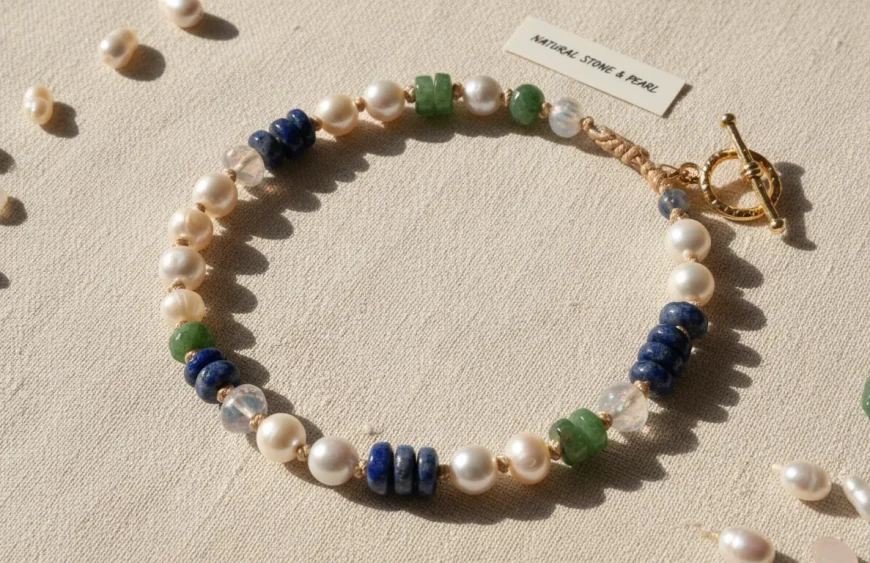
- Materials: pearls, jasper, quartz, agate, mixed gemstone strands
2) Graduated beads (quietly elegant)
Beads get larger toward the center, creating a natural focal point.
- Best for: dressier looks without a pendant
- Tip: looks great with a V-neck or open collar
3) Long beaded necklaces (sautoir style)
Long strands (often 24″–30″+) became iconic in early 20th-century styling and still look modern with knits and dresses.
- Best for: layering, elongating the torso, minimalist outfits
- Pro move: loop it once for a doubled look
4) Statement/multicolor strands
These are the mood-lifters—bold bead colors, mixed shapes, mixed materials.
- Best for: plain outfits, creative workplaces, vacations
- Tip: keep other jewelry quieter so the beads get the spotlight
The 5 NECKLACES That Go with EVERYTHING | How to Style and Layer Them Like a Pro
Necklace lengths that flatter (and help prevent tangles)
When someone tells me “layering looks messy on me,” it’s almost always a length-spacing issue. A practical length set that works for most people is:
- 14″: sits high like a soft choker
- 16″–18″: hits collarbone area
- 20″–24″+: drops to upper chest
Varying lengths creates separation so each necklace of beads has its own space (and tangles less). If you want a more technical guide to crystals and daily wear habits, StarryBead’s internal guide, Crystals, Explained: How to Choose, Wear, and Care for Natural Stones (Without the Hype), is a solid next read.
Materials guide: what your beads say (and how they behave)
Not all beads live the same life. Some are tough (jasper, agate), some are sensitive (pearls), and some are “hard but chip-able” if knocked just right (quartz). Here’s a practical comparison you can use while shopping.
| Bead material | Look & vibe | Durability (daily wear) | Care level | Notes for buyers |
|---|---|---|---|---|
| Freshwater Pearl | Soft glow, classic, calming | Medium (surface can scratch) | High | Avoid chemicals; wipe after wear; restring periodically |
| Clear Quartz | Clean, bright, versatile | High | Medium | Great for everyday; store to prevent scratches from harder stones |
| Amethyst | Purple, thoughtful, soothing | High | Medium | Can fade with prolonged sun exposure |
| Black Tourmaline | Bold, grounding, protective vibe | Medium-High | Medium | Avoid hard drops; edges can chip depending on cut |
| Jasper/Agate | Earthy, steady, natural patterns | High | Low-Med | Usually very wearable; great starter bead necklaces |
If you’re building a bead necklace wardrobe around a single “signature” stone, you may also like StarryBead’s Amethyst: The Complete Guide to Meaning, Value, Benefits, and How to Wear It (Without the Hype).
Care: how to clean and store a necklace of beads (without ruining it)
I learned the hard way that “jewelry is jewelry” is a myth—especially when pearls are involved. The safest rule for any necklace of beads is gentle handling, minimal chemicals, and smart storage.
Daily habits that extend the life of your beads
- Put your necklace on last (after perfume, hair spray, lotion).
- Take it off before showering, swimming, or exercising.
- Wipe beads with a soft, dry cloth after wear.
Pearl-specific care (the delicate one in the group)
Pearls need extra caution. Many jewelers advise avoiding ultrasonic/steam cleaning and limiting water exposure, because it can weaken thread over time. Professional cleaning and periodic restringing are commonly recommended for frequently worn pearl strands. See pearl-care guidance like TrueFacet’s pearl cleaning and care guide.
Storage that prevents tangles and scratches
- Store strands flat or hanging individually.
- Use a soft pouch or a divided jewelry box.
- Keep pearls away from harder stones (they can scratch).

Value & authenticity: what affects price in a necklace of beads?
A necklace of beads can cost $20 or $20,000+ depending on material, craftsmanship, and brand positioning. For pearls specifically, pricing is heavily influenced by pearl type, luster, blemishes, size, and shape—many guides place real pearl strands in a wide range from entry-level to heirloom pricing (see Pearls of Joy’s overview of pearl cost factors).
When shopping, look for:
- Material transparency: natural vs dyed vs imitation
- Craft details: knotting, clasp quality, strand consistency
- Documentation: certificates, receipts, or appraisal for higher-value pieces
If you’re buying a meaningful crystal piece (not just “pretty beads”), the build method also matters. StarryBead’s Macrame Crystal Necklace: What It Is & Why It Works breaks down why construction changes comfort, durability, and wearability.
Faith & culture: what does the Bible say about wearing beads?
Many readers ask whether wearing beads (or jewelry in general) is “allowed.” In broad Christian interpretation, jewelry isn’t automatically forbidden; the recurring emphasis is usually about priority and posture—not letting outward adornment replace inner character. If this is personal for you, it can help to treat a necklace of beads as a reminder: not “look at me,” but “return to what matters.”
Quick FAQ (People also ask)
1) What is a bead necklace called?
Most commonly, a beaded necklace. If it’s used for meditation or mantra counting, it may be called a mala (japamala). If it’s a metal “bead chain,” it’s often called a ball chain.
2) What does a bead necklace mean?
A necklace of beads can symbolize intention, protection, identity, status, prayer, or a life milestone—depending on culture and personal use.
3) What is the other name for a bead chain?
A ball chain—small metal spheres connected by short bars.
4) What is this 📿?
Often it represents prayer beads—commonly a mala in Buddhist/Hindu contexts or a rosary in Christian contexts, depending on design.
5) How do I clean a necklace of beads safely?
Use a soft cloth after wear. Avoid soaking unless the materials are known to be water-safe. For pearls, avoid harsh cleaners and ultrasonic tools; consider professional cleaning for best results.
6) How often should a pearl bead necklace be restrung?
If worn often, many jewelers recommend periodic inspection and restringing as the thread can stretch over time. Frequency depends on wear habits (daily vs occasional).
7) Can I wear a necklace of beads every day?
Yes—choose durable stones (jasper, agate, quartz) and use gentle care habits. Pearls can be daily-worn too, but they need more careful handling.
Final takeaway: your necklace of beads is a small story you can wear
A necklace of beads isn’t just an accessory—it’s a portable ritual, a style signature, a memory with a clasp. I’ve seen people come back months later and say, “I didn’t buy it because I believed in anything… but it helped me stay steady.” Whether you choose pearls for softness, quartz for clarity, or tourmaline for grounding, the best strand is the one that fits your real days—not an idealized version of you.