Tiger’s Eye: Meaning, Benefits, Properties, and How to Wear This Golden Confidence Stone
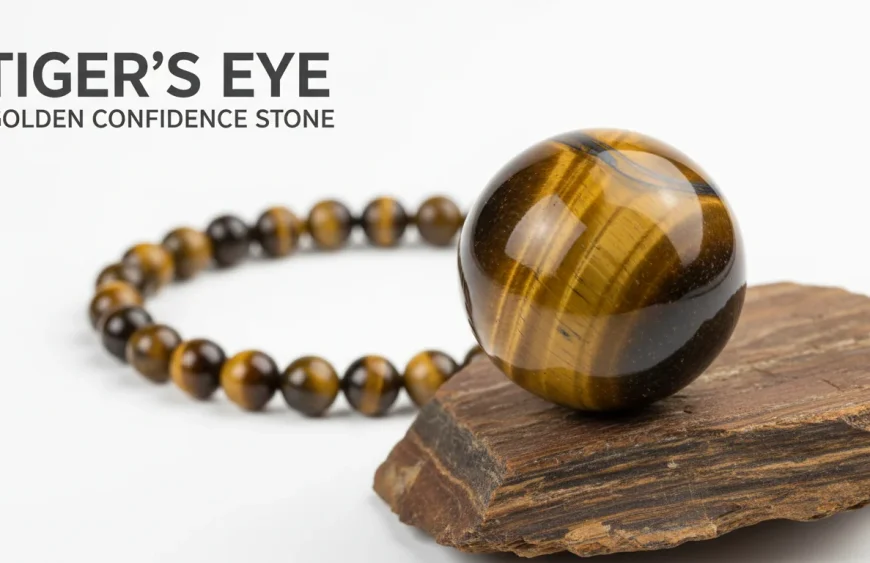
You notice it the first time light hits the stone—like a cat’s eye in a dark room, tiger’s eye seems to look back. I still remember testing a strand of beads at my workbench, turning it slowly under a lamp, watching the band of light glide across each bead like a moving horizon. If you’ve ever wondered why tiger’s eye feels both timeless and modern—equal parts grounding and stylish—you’re in the right place.
In this guide, we’ll cover what tiger’s eye is, why it shimmers, what it’s traditionally believed to support, how to spot quality, and how to wear it (especially in handcrafted jewelry) so it fits your life—not just your feed.

What Is Tiger’s Eye? (And Why It Shimmers)
Tiger’s eye is a silica-based gemstone (SiO₂) in the quartz family, best known for its golden-brown bands and a silky luster. Its signature “moving light” effect is called chatoyancy, caused by fine, aligned fibers and layered structure that reflect light in a narrow band. Turn the stone, and the bright stripe appears to slide—this is why tiger’s eye feels so alive in jewelry.
Key physical traits (useful when you’re shopping):
- Color: golden to red-brown (sometimes blue or deeper red varieties exist)
- Hardness: about 6.5–7 on the Mohs scale (durable for daily wear)
- Luster: silky, especially when well-polished
For mineral specifics and baseline properties, see Tiger’s eye (Wikipedia).
Tiger’s Eye Meaning: The “Steady Courage” Stone in Modern Life
Across cultures, tiger’s eye has been treated as a protective talisman associated with courage, clear judgment, and right use of power. I’ve found that this symbolism resonates most today when life feels noisy—too many tabs open, too many opinions, too little certainty. People reach for tiger’s eye when they want to feel grounded, decisive, and calmly confident, especially during transitions: new jobs, public speaking, moving cities, or rebuilding routines.
Historically, it was linked with watchfulness and protection; some sources describe it as an “all-seeing” stone used in amulets and carried for bravery. If you enjoy the historical lens, Crystal Vaults summarizes many traditional beliefs and cultural references in their overview of Tiger’s Eye meaning and uses.
Tiger’s Eye Benefits (Wellness Beliefs vs. What We Can Verify)
Let’s separate what’s measurable from what’s meaningful.
What’s verifiable
Tiger’s eye is a durable quartz gemstone with a distinctive optical effect. It holds up well in bracelets and rings, resists everyday scratching better than softer stones, and looks dynamic under natural light.
What many wearers believe it supports
In crystal wellness traditions, tiger’s eye is commonly associated with:
- Grounded confidence (less second-guessing, more follow-through)
- Mental clarity and practical decision-making
- Protective, steady energy during stress
- Motivation and prosperity mindset (especially in work and money goals)
In my own testing at the bench—wearing a tiger’s eye bracelet during long production days—I noticed it worked best as a cue: every time the stone caught light, it reminded me to slow down, check my posture, and finish one task before starting the next. That’s not a lab claim; it’s a real-world ritual effect many customers describe in different words.
Types of Tiger’s Eye You’ll See in Jewelry
Tiger’s eye isn’t always the same shade. When you’re browsing, these are common variations:
- Classic golden-brown tiger’s eye: the most recognized, warm and versatile
- Red tiger’s eye: deeper, more fiery tone (often associated with drive and vitality in crystal lore)
- Blue tiger’s eye (often called hawk’s eye): cooler, moodier bands; striking in minimalist designs
- Tiger iron: layered material that can include tiger’s eye with other iron-rich bands, giving a bolder pattern
Localities and sourcing vary widely; for an in-depth locality list, Mindat’s mineral database is a solid reference: Tiger’s Eye on Mindat.
How to Choose a High-Quality Tiger’s Eye (What I Check First)
When StarryBead evaluates tiger’s eye for jewelry, the goal is simple: strong chatoyancy, clean polish, stable color, and comfortable wear. Here’s what matters most when you’re shopping.
-
Chatoyancy strength
- Rotate the bead/stone under light. A high-quality piece shows a crisp, bright moving band rather than a dull glow.
-
Pattern clarity
- Look for distinct bands and depth (it should feel layered, not flat).
-
Polish and finish
- A good polish enhances the silky luster without looking plasticky.
-
Cut consistency (for beads)
- Even bead sizing and smooth drill holes reduce breakage and improve comfort.
-
Transparency about authenticity
- Ask for proof of natural stone where possible. At StarryBead, we provide certificates to support authenticity and quality—because trust matters as much as style.
| What to Check | What “Good” Looks Like | Red Flags | Why It Matters |
|---|---|---|---|
| Chatoyancy (cat’s-eye effect) | Bright, continuous “silky” band that moves smoothly under light; strong contrast between light/dark areas | Dull or patchy band; effect only visible at one angle; cloudy/flat appearance | Chatoyancy is the signature feature of tiger’s eye and drives beauty and value |
| Color & banding | Warm golden-brown to honey tones with distinct, even banding; pleasing natural variation | Gray/muddy tones; overly uniform “printed” look; neon/unnatural color; blotchy dye pooling | Color and banding indicate quality and natural character; heavy dye can reduce durability and value |
| Polish/finish | High, glassy polish with crisp reflections; minimal surface marks; no pits | Scratches, hazing, orange-peel texture, pits or fractures; dull areas around edges | Good polish enhances chatoyancy and longevity; poor finish can hide flaws or wear quickly |
| Bead uniformity (for bracelets/necklaces) | Consistent size and shape, centered holes, matching color range and band orientation; smooth stringing | Mixed sizes, out-of-round beads, mismatched tones, uneven spacing; sharp edges at holes | Uniform beads look premium, sit comfortably, and reduce breakage risk on stringing |
| Drilling/setting quality | Cleanly drilled holes (no chipping), secure prongs/bezel, even alignment; sturdy clasps and findings | Chipped hole edges, off-center drilling, loose prongs, visible glue, thin/soft metal | Prevents cracking and loss; poor workmanship can damage the stone and shorten lifespan |
| Authenticity documentation | Clear disclosure (natural vs dyed/treated), reputable seller, return policy; lab report for high-value pieces | Vague claims (“100% genuine” only), no treatment disclosure, inconsistent descriptions, no returns | Reduces risk of buying dyed/glass/composite stones and ensures you get what you paid for |
Tiger’s Eye Jewelry: How to Wear It (So It Feels Like You)
Tiger’s eye is one of the easiest stones to style because it behaves like a neutral—gold, brown, and bronze tones pair with almost everything. The trick is choosing a format that matches your daily rhythm.
Everyday styling ideas
- Bracelet: best for frequent visual reminders (you’ll see it while typing, driving, journaling)
- Necklace: closer to the heart and throat area; great for statement layering
- Ring: bold and personal; ideal if you want a “power piece”
- Earrings: subtle shimmer that catches light as you move
Pairing tiger’s eye with other stones (StarryBead favorites)
- Clear Quartz for a clean, bright “reset” feel
- Citrine for warm, sunny styling and prosperity symbolism
- Smoky Quartz for extra grounding and a darker palette
- Black Tourmaline for a protective, street-ready look
- Freshwater Pearl to soften tiger’s eye with classic elegance
If you’re building a capsule collection, tiger’s eye plays especially well with neutrals (cream, black, denim, camel) and metals like gold vermeil or warm silver.

A Simple Tiger’s Eye Ritual for Focus (Beginner-Friendly)
If you like the spiritual side but want something practical, try this 60-second routine. I use it before tasks I’m tempted to avoid—emails, budgeting, hard conversations.
- Hold your tiger’s eye (bracelet or stone) in your dominant hand.
- Breathe in for 4 seconds, out for 6 seconds, twice.
- Name one outcome you want today (not ten—one).
- Take one action immediately (send the message, open the document, start the timer).
This works because it turns the stone into a consistent trigger for follow-through. The jewelry becomes a tool, not just a pretty object.
Care and Cleaning: Keep Tiger’s Eye Bright and Silky
Tiger’s eye is fairly durable, but it still benefits from gentle care—especially in bracelets that see constant contact.
- Cleaning: mild soap + lukewarm water + soft cloth; dry thoroughly
- Avoid: harsh chemicals, ultrasonic cleaners, and prolonged soaking (especially if your piece uses elastic or certain adhesives)
- Storage: keep separate from harder gems to reduce micro-scratches
- Wear habits: remove before heavy lifting, swimming, or applying lotions/perfume
Quick Data Snapshot: Why Tiger’s Eye Is So Popular in Accessories
Tiger’s eye tends to win in jewelry because it balances three things: durability, visual movement, and neutral color compatibility. Here’s a simple way to think about why people keep repurchasing it for daily wear.

Watch Next: See Chatoyancy in Motion (It’s the Whole Magic)
Photos help, but video is where tiger’s eye really clicks—because the light band moves as the angle changes.
Tiger’s Eye: Spiritual Meaning, Powers And Uses
Why Tiger’s Eye Fits StarryBead’s Mission (Wellness You Can Wear)
StarryBead was built for people who want their accessories to mean something—without sacrificing craftsmanship. Tiger’s eye belongs here because it’s both symbolic and practical: a stone many associate with grounded confidence, and a gemstone tough enough for real life. When you choose tiger’s eye jewelry, you’re not just picking a color—you’re choosing a daily reminder to stand steady, think clearly, and move with intention.
For more crystal styling and care guides, you may also like:
- How to choose the right crystal bracelet for your intention
- Crystal jewelry care: cleaning, storage, and longevity tips
- Gemstone authenticity: what certificates mean and what to ask
(And if you want deeper gem-property context, Gemstones.com maintains a reference-style overview here: Tiger’s Eye gem guide.)
FAQ: Tiger’s Eye Questions People Search Most
1) What is tiger’s eye used for spiritually?
Many people use tiger’s eye as a symbolic support for courage, protection, grounded confidence, and clear decision-making—often worn daily as jewelry.
2) Is tiger’s eye a real gemstone or a type of quartz?
It’s a real gemstone material in the quartz family (silica, SiO₂) with a chatoyant optical effect.
3) How can you tell if tiger’s eye is real?
Look for natural chatoyancy (a moving light band), layered depth, and non-uniform patterning. Ask for authenticity documentation when available.
4) Can you wear tiger’s eye every day?
Yes—its Mohs hardness around 6.5–7 makes it suitable for everyday jewelry, with basic care (avoid harsh chemicals and heavy impact).
5) What does tiger’s eye symbolize?
Traditionally it symbolizes courage, protection, integrity, and wise use of personal power—often described as steady, grounded confidence.
6) What stones pair well with tiger’s eye in jewelry?
Popular pairings include Clear Quartz, Citrine, Smoky Quartz, Black Tourmaline, and Freshwater Pearl for balanced color and intention themes.
7) Does tiger’s eye come in different colors?
Yes. The most common is golden-brown, but you’ll also see red tiger’s eye and blue tiger’s eye (often called hawk’s eye), plus layered materials like tiger iron.
Conclusion: Let Tiger’s Eye Catch the Light—And Catch You, Too
At the end of the day, tiger’s eye isn’t loud. It’s steady. It’s the kind of stone that doesn’t beg for attention—until the light hits it, and suddenly you remember you’re allowed to feel strong and calm at the same time. If you’re ready to wear that reminder daily, tiger’s eye is one of the most practical, beautiful places to start.